La Ministeriale 2025 sembra sia andata piuttosto bene.

L’articolo di Space News:
At a press conference here Nov. 27 at the conclusion of the two-day ministerial conference, ESA Director General Josef Aschbacher announced that ESA member states had agreed to provide 22.067 billion euros ($25.58 billion) for the agency’s programs. That was very close to the agency’s proposal of 22.254 billion euros.
The funding was a 32% increase from the 16.9 billion euros ESA received at the previous ministerial in 2022, or 17% when corrected for inflation.
Going into the ministerial, he was managing expectations, noting that it in the past the agency received in the range of 90% to 93% of its request. “Anything that is, I would say, above 20 billion will be considered a good success,” he told reporters Nov. 25.
Instead, the agency received 99% of its overall request. “This is quite outstanding,” he said at the press conference. “I think this message of Europe needing to catch up and to step up and literally elevate the future of Europe through space has been taken by our ministers very seriously.”
Comunicato stampa di ESA:
 ESA Member States commit to largest contributions at Ministerial
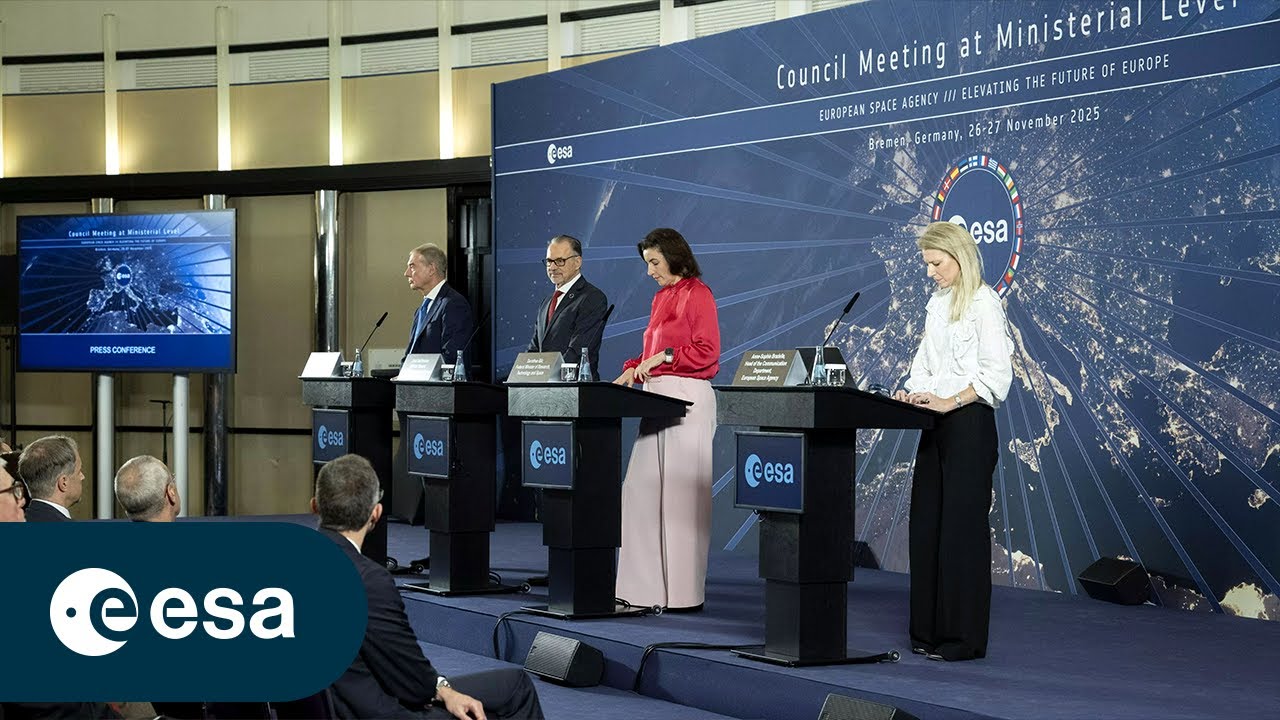
Conferenza stampa:
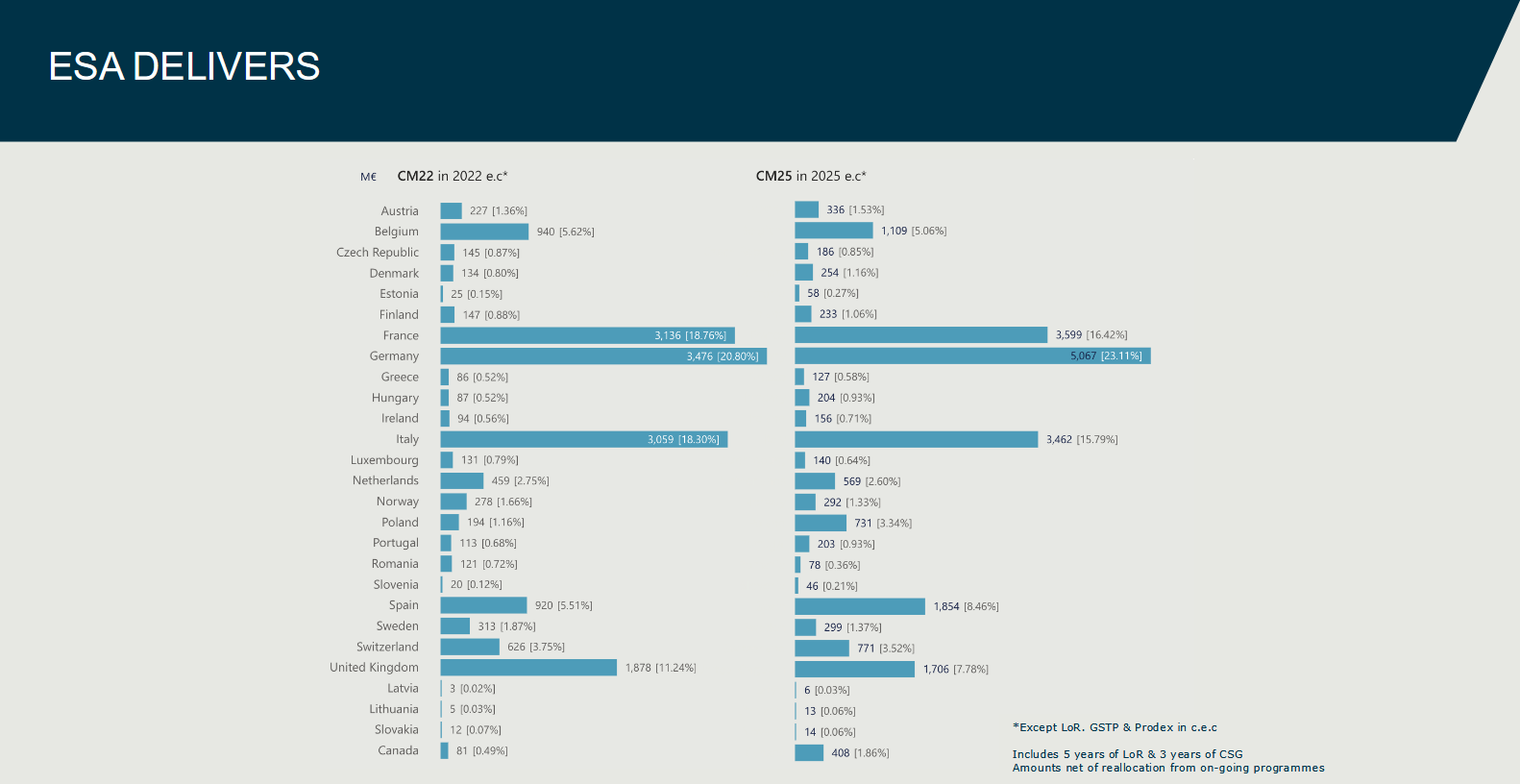
Slide con un po’ di informazioni [pdf]:
L’editoriale di European Spaceflight:
While many programmes saw oversubscriptions, the agency’s Human and Robotic Exploration budget, which ESA initially projected at €3.7 billion, experienced a significant undersubscription. ESA announced that Member States have committed just over €2.9 billion, a shortfall of more than 20%. The figure is, however, slightly higher than the previous three-year period, during which €2.7 billion in spending had been committed. […] ESA has not yet confirmed which parts of its Human and Robotic Exploration programme have been unsubscribed.
[…] In addition to the Human and Robotic Exploration programme, the United Kingdom’s spending on ESA programmes saw a notable reduction, with the country now the fifth largest contributor, falling behind Spain, which recorded a substantial increase in its spending. While the United Kingdom’s total spending was reduced by just €172 million, from €1.878 billion to €1.706 billion, its contribution as a percentage of the total budget fell from 11.2% to 7.7%, the largest decline of any country by a considerable margin.
