Il lancio è avvenuto con successo.
3 Mi Piace
Questo lancio dalla 39A segue di solo 7 giorni quello di Axiom-4. Non era mai accaduto che passasse così poco tempo fra un lancio con equipaggio ed il successivo da questa rampa. Il record precedente erano i 9 giorni (8 giorni e 19 ore) fra Crew-7 e Starlink 6-12 (fra agosto e settembre del 2023).
4 Mi Piace
Foto
https://x.com/SpaceX/status/1940147162626605426
https://x.com/SpaceX/status/1940239494307094810
Decollo
https://x.com/SpaceX/status/1940154695160344816
Atterraggio
https://x.com/SpaceX/status/1940156837560525247
Rilascio del satellite
https://x.com/SpaceX/status/1940163604575068648
3 Mi Piace
 Thread con le prime immagini da Sentinel 4, ancora in fase di commissioning.
L’articolo dal sito di EUMETSAT:
The first images, captured on 8 October 2025 and released to the world today, demonstrate Copernicus Sentinel-4’s remarkable capability to track multiple pollutants and trace gases across Europe and surrounding regions. The images reveal nitrogen dioxide hotspots over Italy’s Po Valley, elevated ozone levels across the Balkans, Bulgaria, and Greece and sulphur dioxide plumes from both natural and anthropogenic sources.
Copernicus Sentinel-4 is still undergoing commissioning so these early first images represent just a taster of what is to come: once operational, the mission will provide unprecedented hourly views of such pollutants across Europe from geostationary orbit. The hourly capability will enable experts to track how pollution varies throughout the day – such as traffic peaks during rush hour – and observe pollutants like ozone as they form, revealing differences between city centres and suburbs and providing authorities with more precise information to protect public health.
3 Mi Piace
Le prime immagini da MTG-S sono state presentate durante la 18a European Space Conference che si è aperta oggi.
 Il comunicato di ESA:
 Una delle immagini:
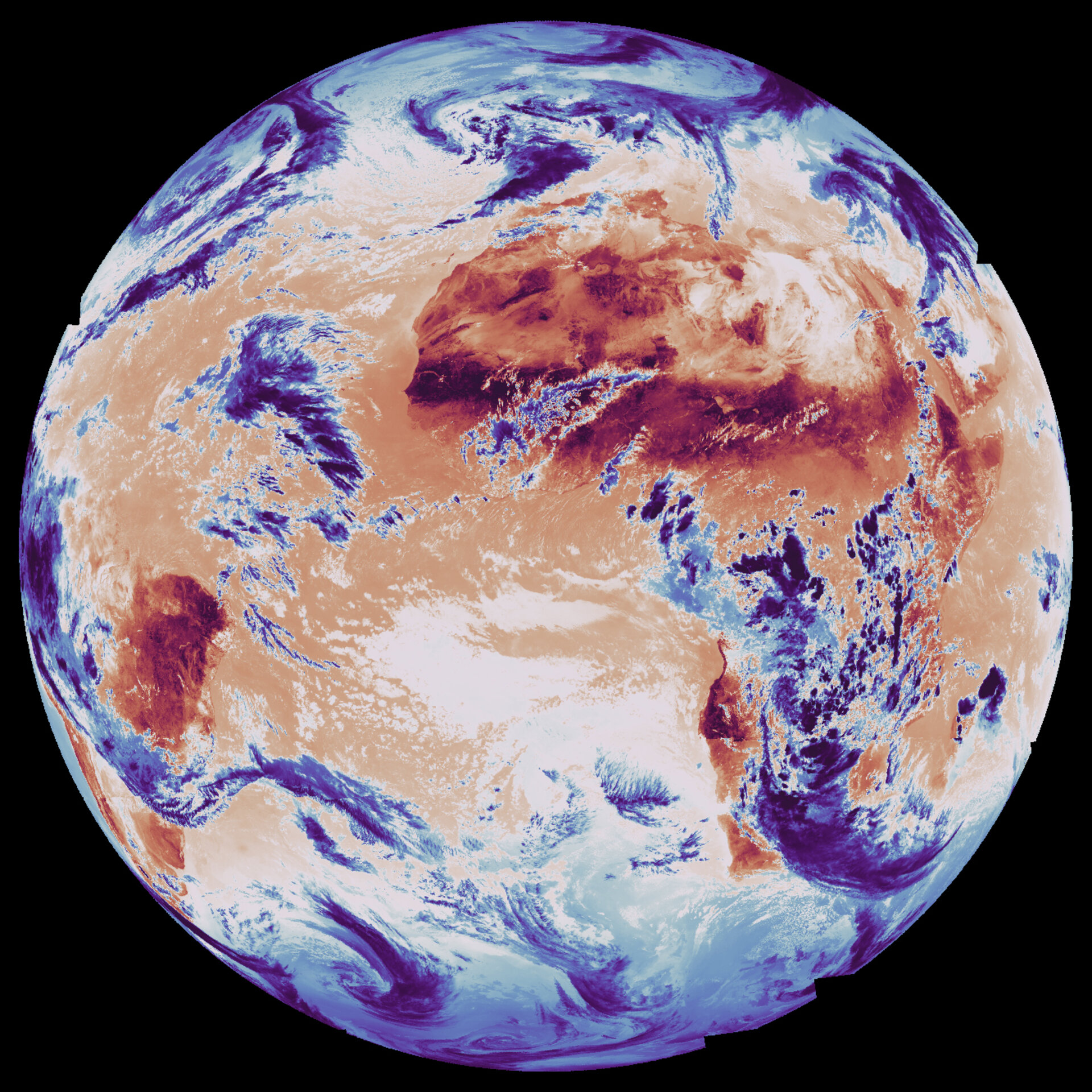
The image shows Earth from geostationary orbit, about 36 000 km from the planet’s surface. It was captured on 15 November 2025 by the [MTG](https://www.esa.int/Applications/Observing_the_Earth/Meteorological_missions/meteosat_third_generation)-Sounder’s [Infrared Sounder instrument](https://www.esa.int/Applications/Observing_the_Earth/Meteorological_missions/meteosat_third_generation/Infrared_Sounder), using the long-wave infrared channel, which measures Earth’s surface temperature as well as the temperature at the top of clouds.
1 Mi Piace
Nuovo articolo di Luca Frigerio pubblicato su AstronautiNEWS.it.
4 Mi Piace