We report the discovery of WISPIT 1b and WISPIT 1c, two gas giant exoplanets that are co-moving with the stellar binary WISPIT 1, which itself consists of a K4 star and M5.5 star in a multi-decadal orbit. The planets are at projected separations of 338 au and 840 au and have masses of 10 MJ and 4 MJ, respectively
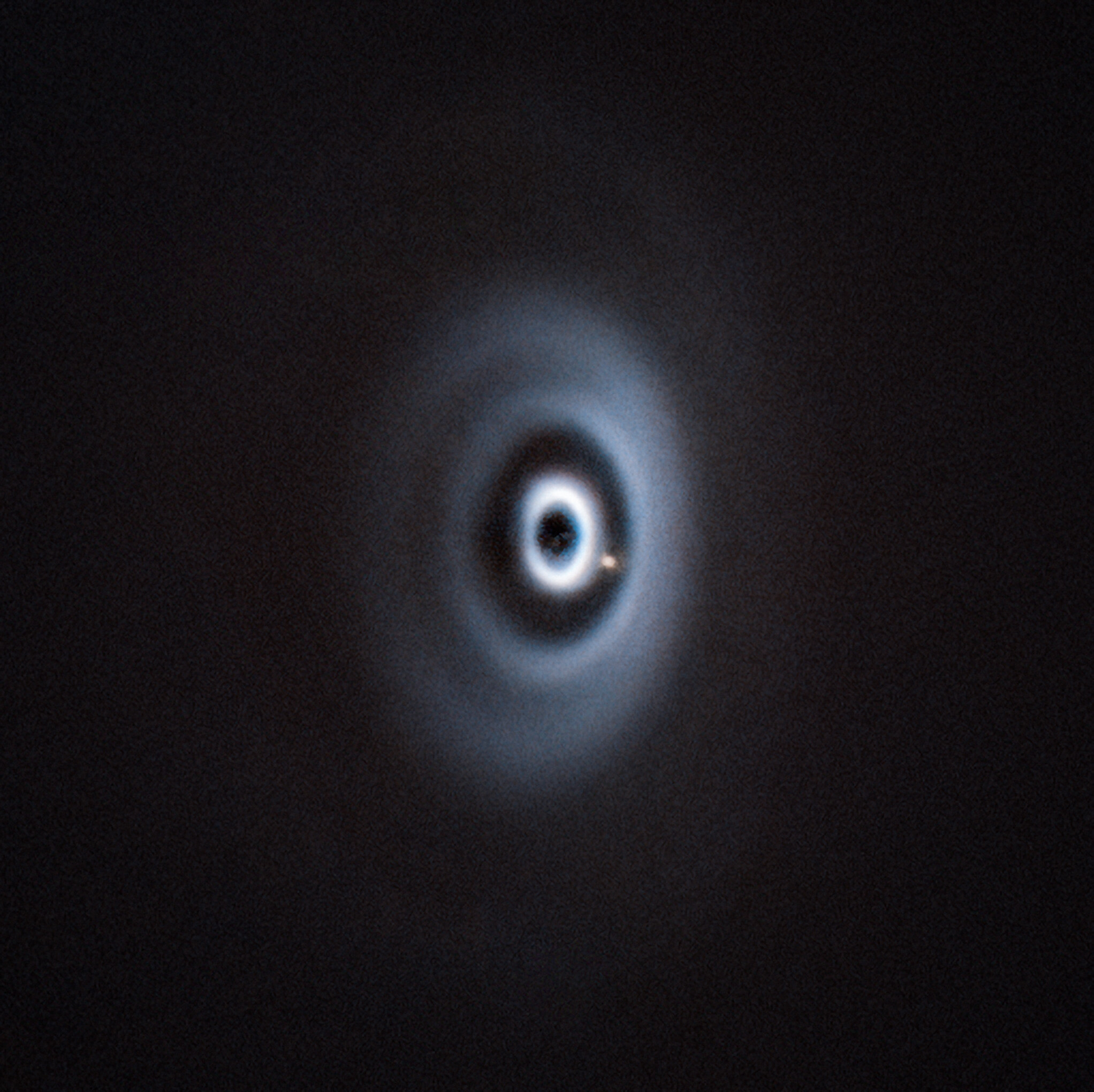
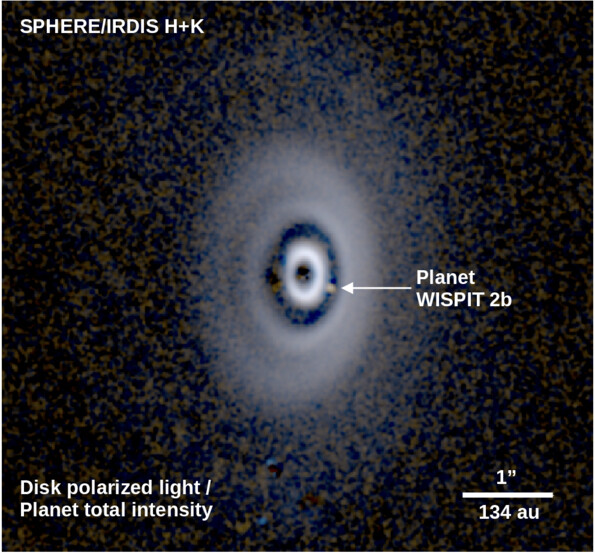
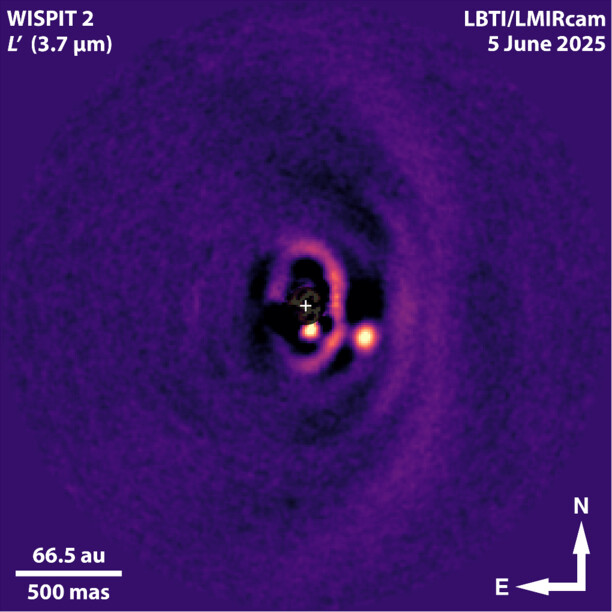
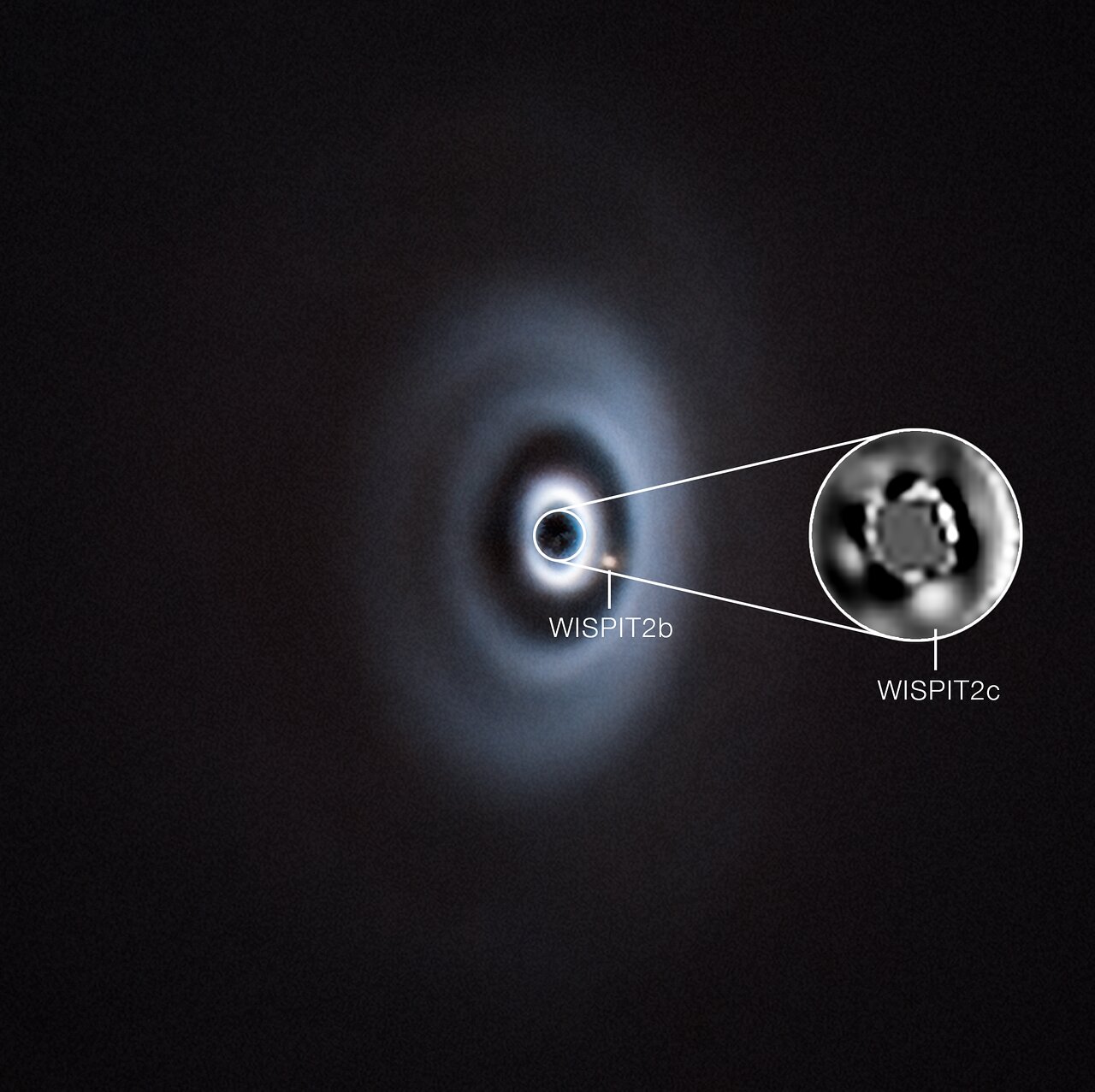
These images, taken with ESO’s Very Large Telescope ([VLT](https://www.eso.org/public/teles-instr/paranal-observatory/vlt/)) shows a planetary system being born around the young star WISPIT 2. The star is surrounded by a disc of gas and dust –– the raw material out of which planets form and grow. In 2025 a team of astronomers detected a young planet, called WISPIT 2b, carving out a gap in the disc around the star. Now the same team has confirmed the presence of a second planet, WISPIT 2c, orbiting even closer to the star, as shown in the inset.
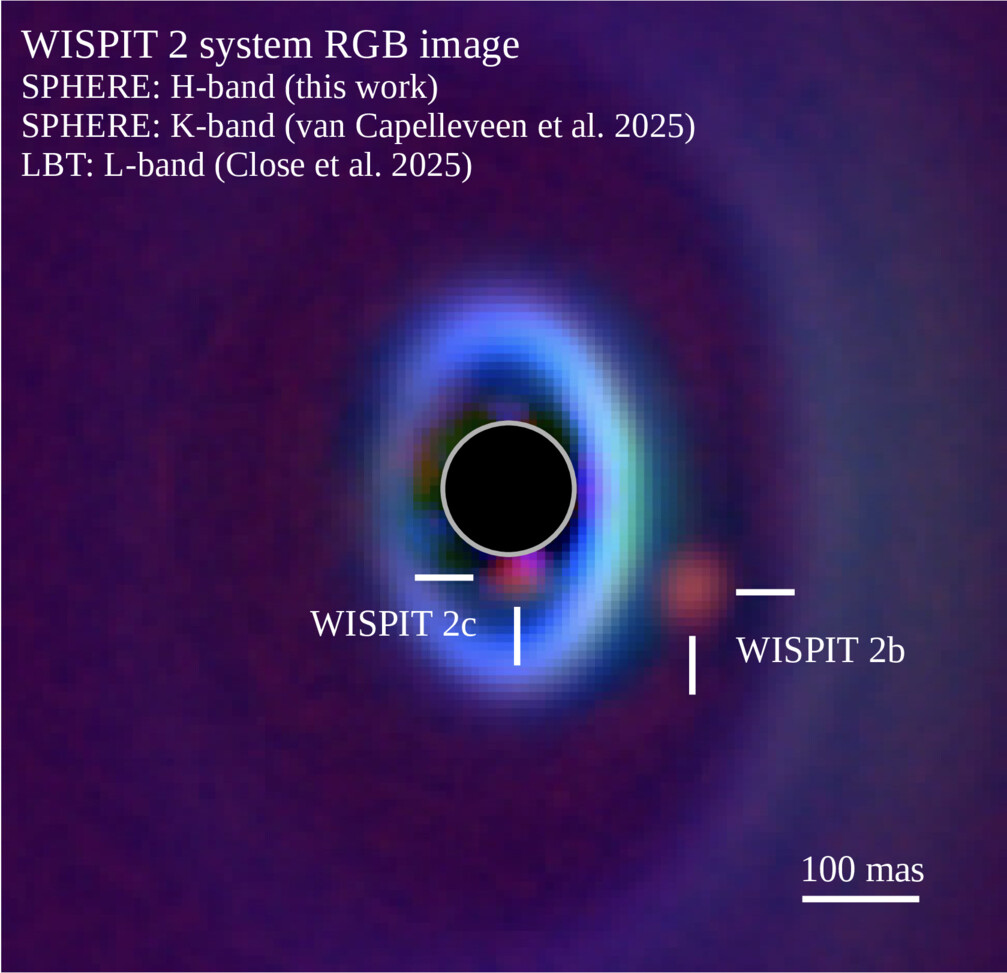
RGB image of WISPIT 2 using the existing L- and K-band data by L. M. Close et al. (2025a) and R. F. van Capelleveen et al. (2025), as well as our new H-band data. We mark the positions of the known planet WISPIT 2b as well as the new inner planet WISPIT 2 c.
Il comunicato di ESO:
Astronomers have observed two planets forming in the disc around a young star named WISPIT 2. Having previously detected one planet, the team have now employed European Southern Observatory (ESO) telescopes to confirm the presence of another. These observations, and the unique structure of the disc around the star, indicate that the WISPIT 2 system could resemble a young Solar System.
[…] The new planet — WISPIT 2c — is four times closer to the central star and is twice as massive as WISPIT 2b. Both planets are gas giants, like the outer planets in our Solar System.
Lo “zoom” di ESO.
Il paper della ricerca:
La notizia in italiano da Media Inaf.
«Wispit 2 è la migliore veduta sul nostro passato che abbiamo avuto finora», dice Chloe Lawlor, dottoranda all’Università di Galway, in Irlanda, e autrice principale dello studio pubblicato oggi su The Astrophysical Journal Letters. Questo sistema è solo il secondo che conosciamo, dopo Pds 70, in cui sono stati osservati direttamente due pianeti in fase di formazione intorno alla propria stella ospite. A differenza di Pds 70, tuttavia, Wispit 2 ha un disco di formazione planetaria molto esteso con lacune e anelli distintivi. «Queste strutture», continua Lawlor, «suggeriscono che altri pianeti si stanno formando e che alla fine riusciremo a individuarli».

 Wide Separation Planets in Time (WISPIT): Discovery of a Gap Hα Protoplanet WISPIT 2b with MagAO-X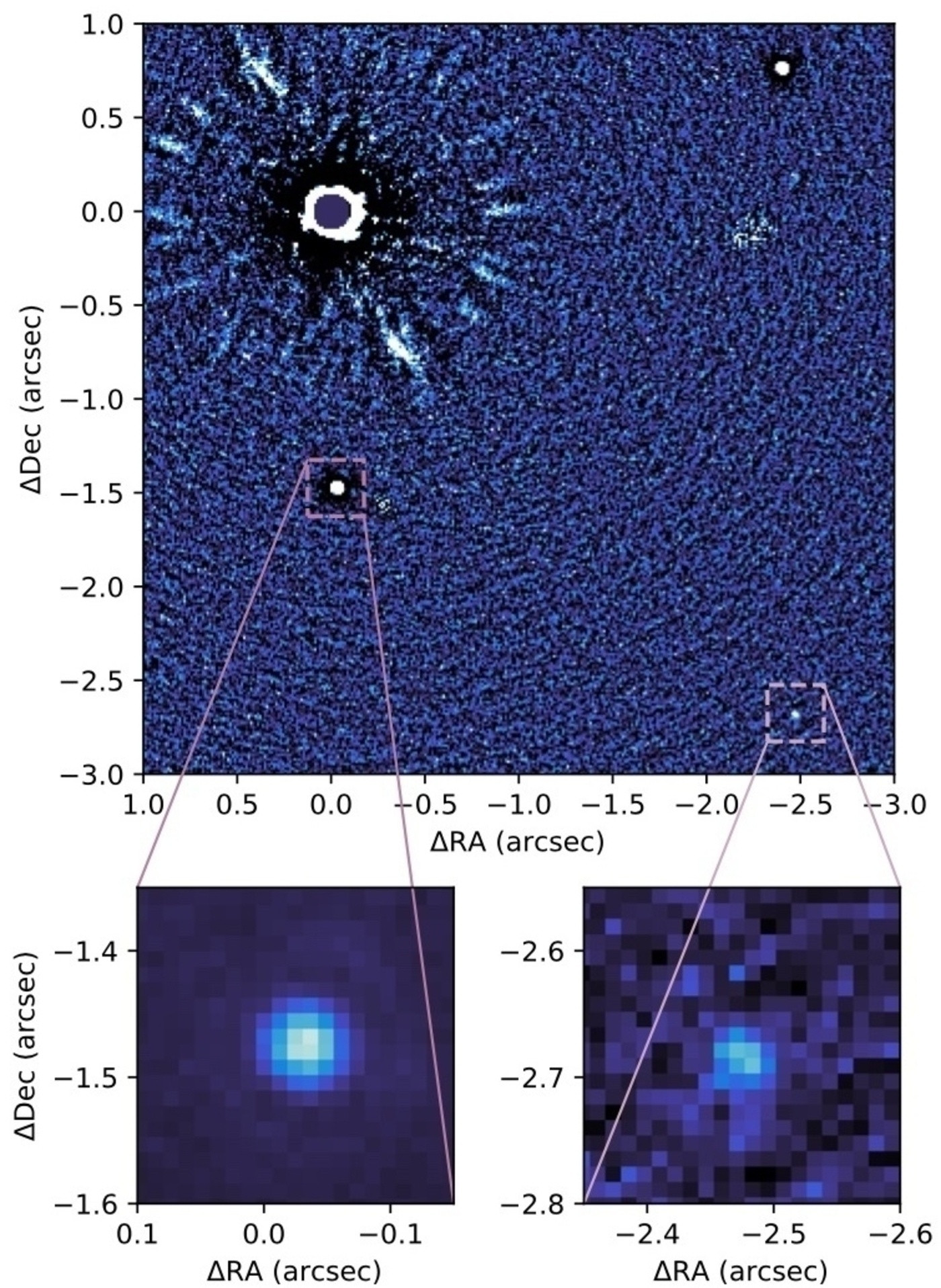
 Il comunicato di ESO:
 La notizia in italiano da Media Inaf.