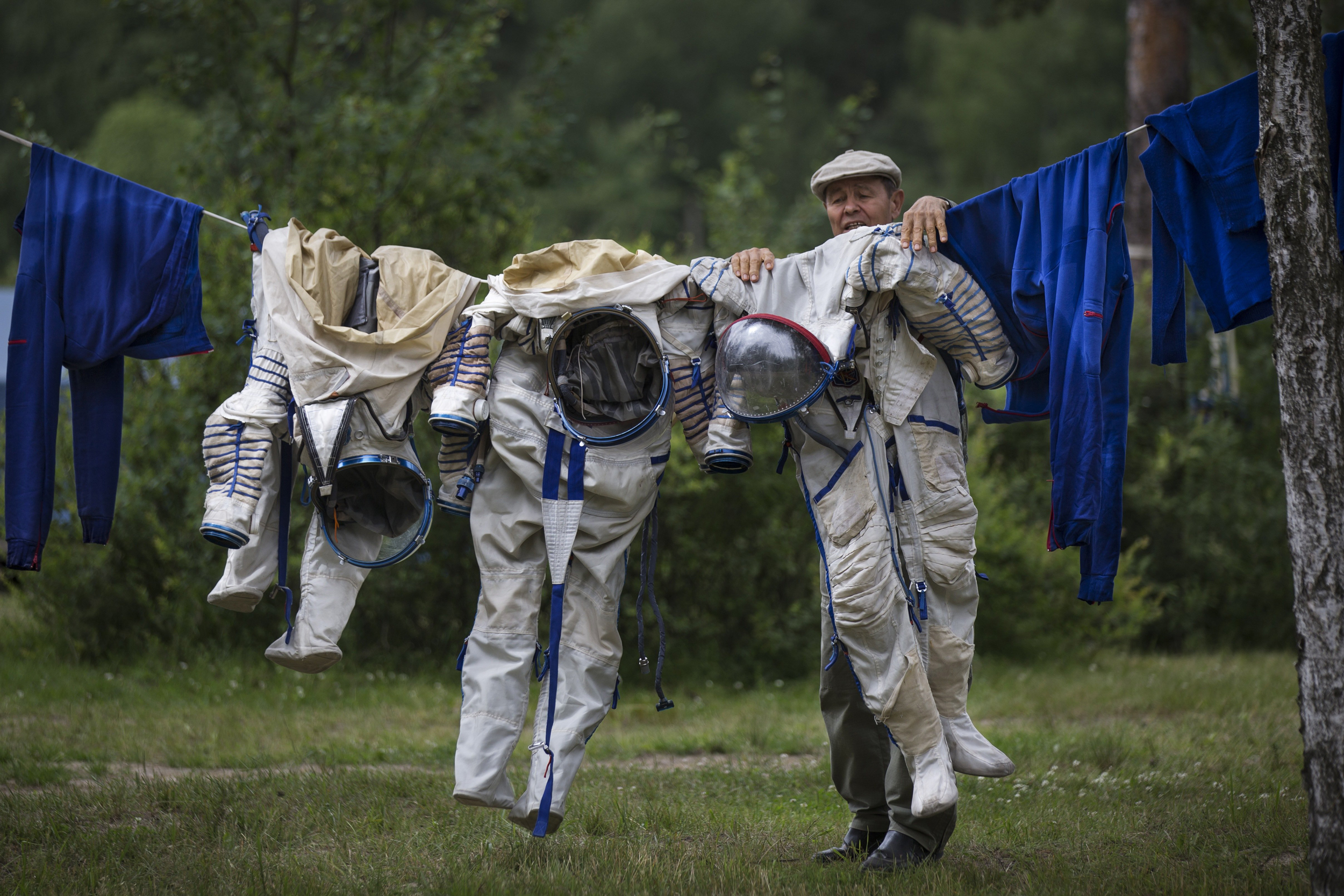
Ho una curiosità.
Avete presente gli allenamenti EVA in piscina?
Ecco,la mia curiosità è,una volta compiuta la sessione di addestramento le tute spaziali emerse dalla vaca e grondanti acqua vengono in qualche modo asciugate (magari con qualche particolare espediente tecnico),o semplicemente le lasciano bagnate?
E ancora,le tute che vengono impiegate in questi esercizi hanno un overgarnment particolare per asciugarle rapidamente (tipo certi costumi da bagno)?
Nelle esercitazioni di sopravvivenza in acqua russe le tute Sokol da addestramento vengono semplicemente stese ad asciugare su funi all’aperto come il bucato.
Cercando una risposta al quesito, mi sono imbattuto in questo bellissimo articolo https://arstechnica.com/science/2013/03/swimming-with-spacemen/
Alla fine c’è anche un link ad una bellissima galleria fotografica.
Non appena ho un attimo, mando una mail all’NBL e vediamo se rispondono!
Buzz, non capisco cosa intendi…forse mi sono espresso male?
Le EMU,ovviamente, sono le tute Americane per attività extraveicolari (EVA).
Cmq queste sono EMU se non sbaglio di classe 3, ovvero non qualificate per il volo spaziale e con qualche componente in meno
Veramente queste sono Sokol,tute intraveicolari.
Come tu mi insegni,servono solo nel caso di depressurizzazione improvvisa della cabina della Soyuz.
Se con una di queste si esce a passeggio nello spazio ci si resta stecchito (anche se una volta ho letto che teoricamente con un overgarnment e un PLSS potrebbero consentire brevissime EVA di emergenza…ma non so se sia vero).
Io ho girato questa domanda su un paio di forum Americani,vediamo se qualcuno risponde.
In realtà a me interessava l’approccio.
Sospetto che,mentre i Russi pragmaticamente asciughino le tute mettendole al sole ( o con qualche altro sistema empirico efficace),gli Americani si siano “posti il problema”,e abbiano inventato qualche marchingegno per asciugare le tute.
Sono curioso di vedere se la mia ipotesi è vera.
Ecco l’interessante risposta al quesito data da un utente di "nasaspaceflight.com forum:
"The spacesuits used for neutral buoyancy simulation at the JSC NBL and elsewhere are the same EMU design used for flight, although all of the NB components are tagged “Class III/Not for Flight” (which mostly means they don’t have the same paperwork trail as flight hardware, although it’s still pretty extensive for the NB hardware.) The outer layers are Ortho fabric (as for flight), and the suit gets thoroughly wet down to the pressure bladder. The inside is pressurized with air (actually, a Nitrox mix at JSC) at 4.3 psi above the local ambient, so the inside is dry for the wearer, as it is in space (except that you’re still affected by gravity, so if you turn upside down in the suit you fall against the helmet ring and shoulders, and you can feel the blood rushing to your head.)
Don’t know the details of the NBL, but back at the Neutral Buoyancy Simulator at NASA Marshall they had a “drying closet”, where the suit components were put after a run at a slightly elevated temperature to dry off more quickly, usually in time for a run the next day. The lower torso assembly was put on a rack upside down and dry air was blown into the feet and legs to dry out the inside (you may be wearing a liquid cooling garment, but there’s still a lot of sweating going on inside the suit most of the time.)" .
Quindi ci sarebbe una cabina speciale dove le tute vengono poste ad asciugare rapidamente.