Vera C. Rubin Observatory - LSST

Il link per seguire la diretta della presentazione delle prime immagini del Vera Rubin (lunedì 23).
We’re nearly ready to #CaptureTheCosmos! Join the NSF–DOE Vera C. Rubin Observatory team on June 23, 2025 at 11am US EDT as they reveal the first incredible images from the world’s newest and most powerful survey telescope, equipped with the largest digital camera ever built.

Pagina ufficiale dedicata al First Look:

:thread: Ultimi thread con info, foto e grafiche varie.


Segnalo anche:

  • un ottimo articolo di Science che presenta il Vera Rubin con grafiche e dati

:newspaper: All-seeing eye: The Vera C. Rubin Observatory is set to transform astronomy. Its wide and fast survey will discover billions of dynamic objects while building up a deep map of the universe

The vast archive, growing by 20 terabytes each night, will after 1 year contain more optical astronomy data than that produced by all previous telescopes combined. […]

The Dark Energy Survey, a project that ran on the Blanco telescope from 2013 to 2019, gathered hundreds of thousands of galaxy images for weak lensing. Euclid, a European space telescope launched in 2023, is aiming for 1 billion. Rubin will detect 20 billion. “The sample size is so large that we’re not constrained by the usual type of [statistical] error,” Tyson says. […]

Meg Schwamb, a planetary scientist at Queen’s University Belfast, and her colleagues predict it will find 3.7 million main belt asteroids, 32,000 objects beyond Neptune, and 90,000 new near-Earth asteroids—including some that may threaten Earth. Depending on the type of object, that’s between two and 12 times the number currently known. “

(già detto ma sempre … :exploding_head:)


  • un articolo di space.com che si interroga sul problema posto da Starlink e altre costellazioni.

“It’s unfortunate that this huge increase [in the number of satellites] is coinciding with the decade of Vera Rubin’s operation,” said Rawls. “It’s existentially frustrating that we are putting a bunch of stuff in orbit that is interfering with our views of the cosmos.” […]

Still, Rawls said that the satellite streak problem is not a death threat for Vera Rubin’s science mission. She describes the satellite streaks more like “bugs on a windshield” on a summer night, obscuring the view at times, but not completely ruining it.

“It’s true that a large fraction of exposures is going to contain a satellite streak, but the field of view is big, and so the number of actual pixels that are affected is very small,” said Rawls. “At most, [the satellite streaks] are a few hundred pixels wide. But a single detector has 4,000 pixels, and the camera has 189 CCD detectors tracking the sky.”


Extra. Intanto negli USA è stata coniata una moneta da 25¢ raffigurante Vera Rubin.
4 Mi Piace

Pubblicata qualche immagine in anteprima.

Da GeekWire:

:newspaper: Get a sneak peek at the Rubin Observatory’s gems

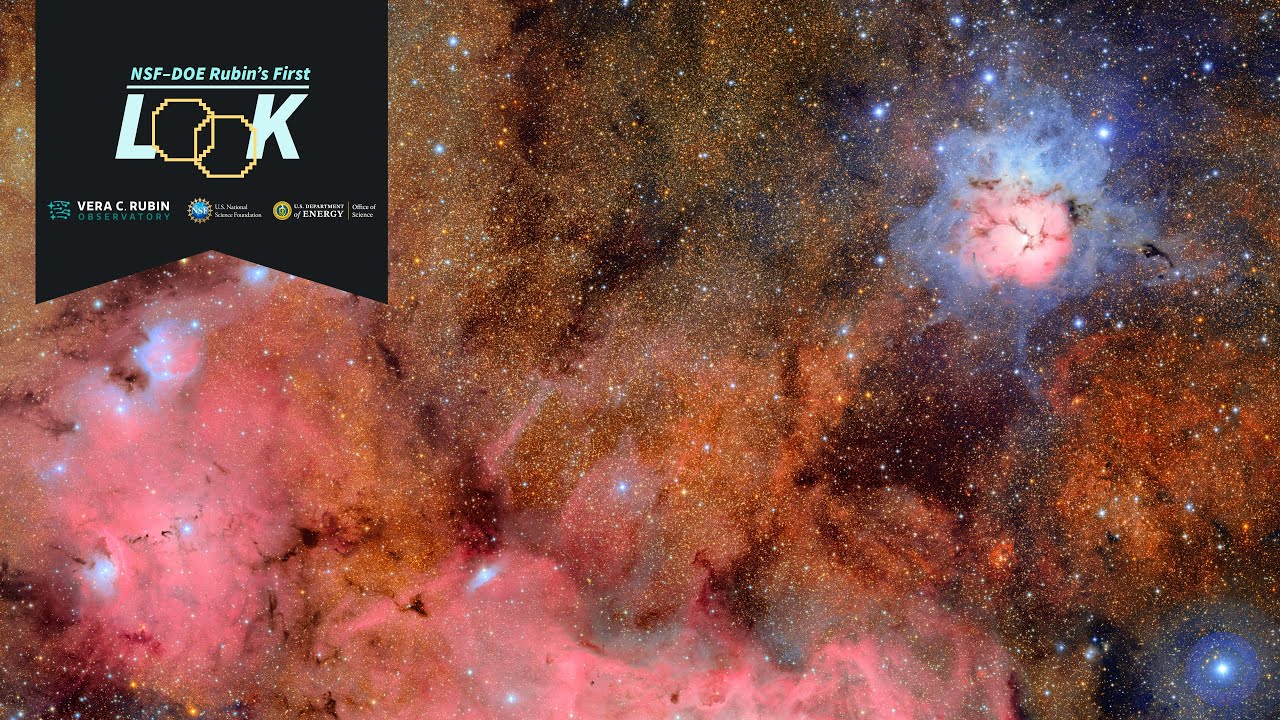
The team behind the Vera C. Rubin Observatory just couldn’t wait until Monday morning’s big reveal to start sharing views from the world’s newest eye on the sky, so they’re providing an advance peek at three pictures and a video.

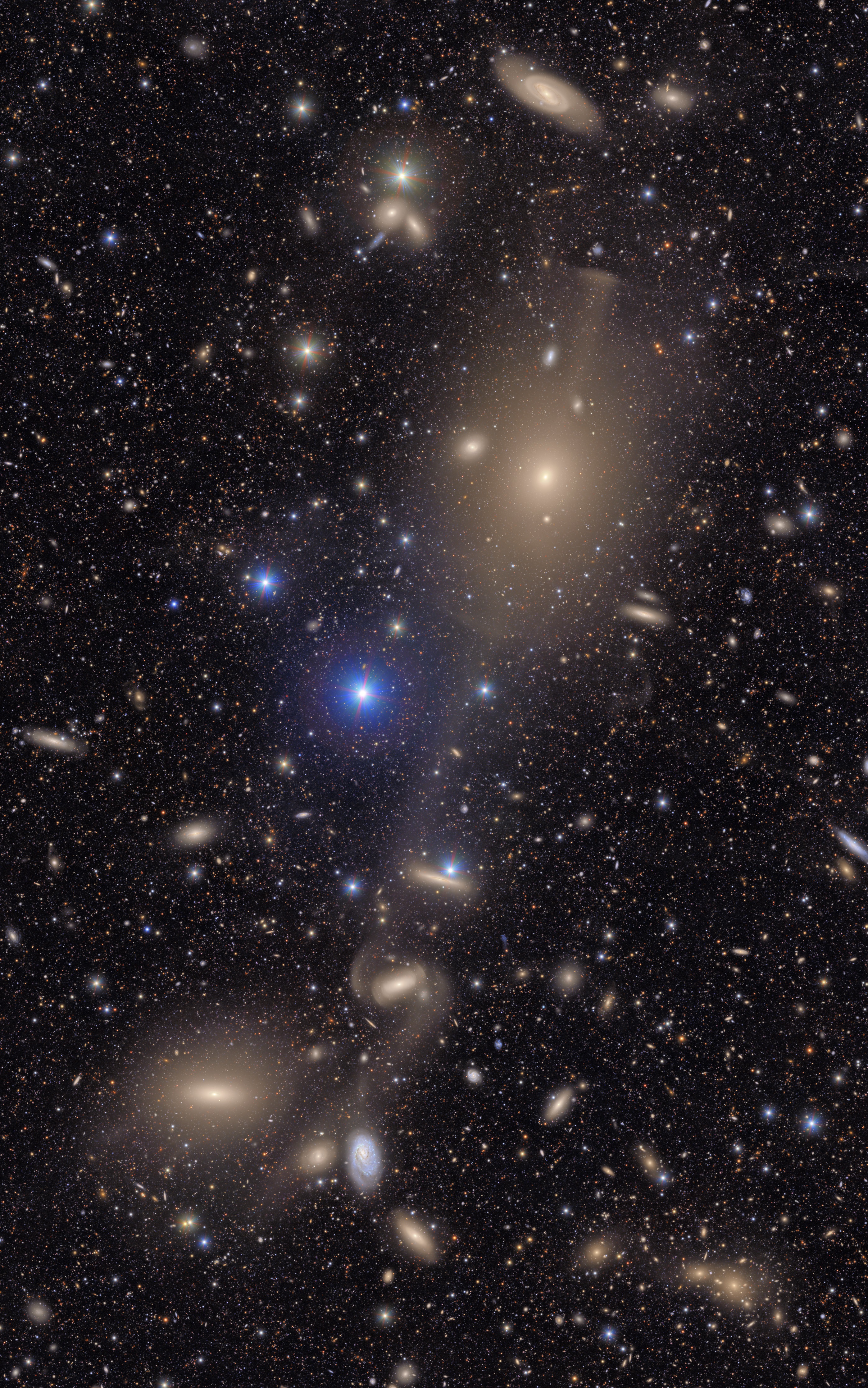
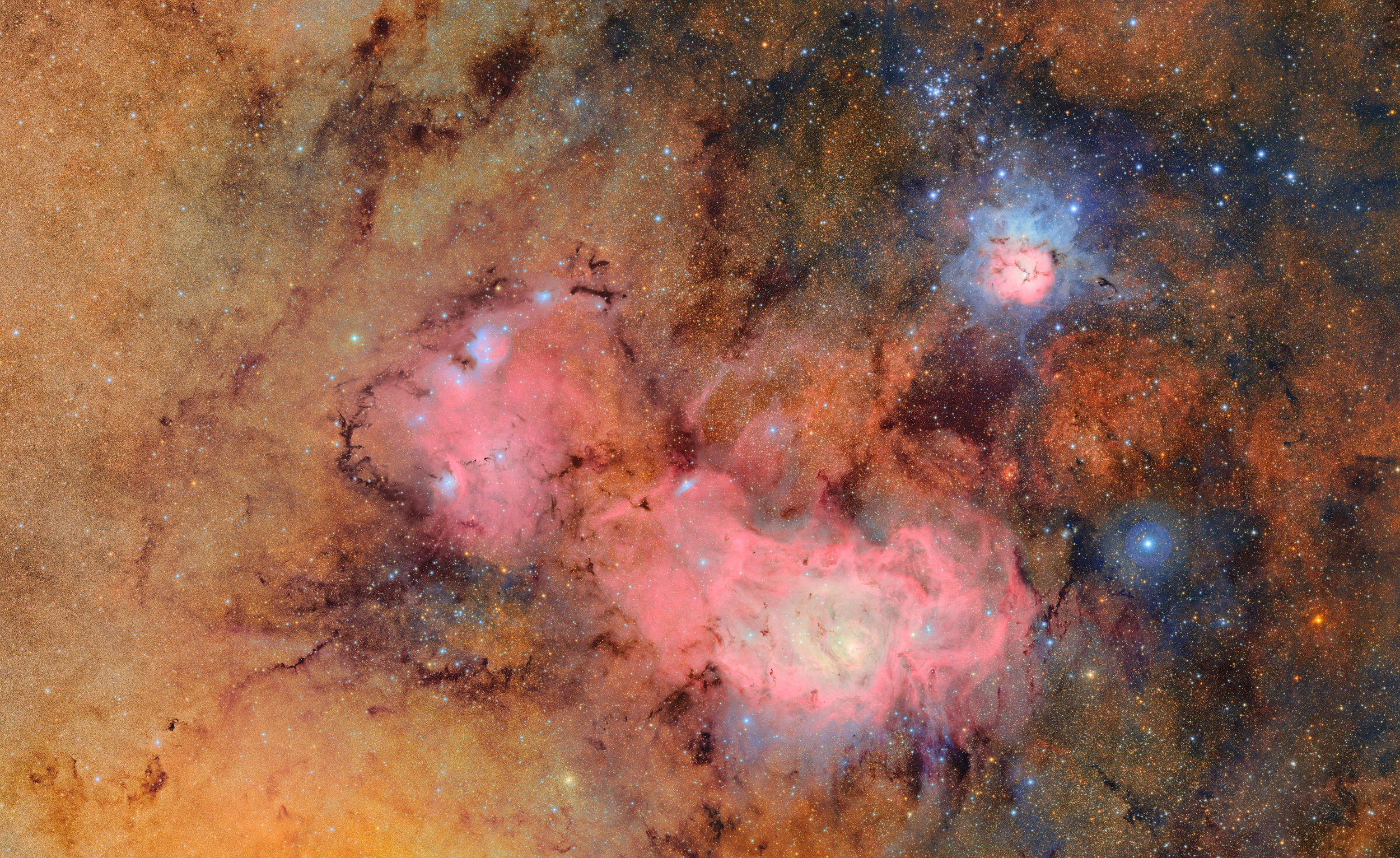
The images include a colorful wide-angle view of the Trifid and Lagoon nebulas in the constellation Sagittarius, a couple of galactic closeups gleaned from the observatory’s survey of the Virgo Cluster, and a zooming video scan of millions of galaxies in the same region of the sky.

All this imagery, gleaned during just 10 hours of test observations, is merely a teaser for the main event: a “First Look” unveiling that will be presented in Washington, D.C., starting at 8 a.m. PT Monday.


This view combines 678 separate images taken by the Rubin Observatory in just over seven hours of observing time. Combining many images in this way clearly reveals otherwise faint or invisible details, such as the clouds of gas and dust that comprise the Trifid Nebula (top right) and the Lagoon Nebula. NSF-DOE Vera C. Rubin Observatory


This image shows a small section of the Rubin Observatory’s total view of the Virgo Cluster. Bright stars in the Milky Way galaxy shine in the foreground, and many distant galaxies are in the background. NSF-DOE Vera C. Rubin Observatory

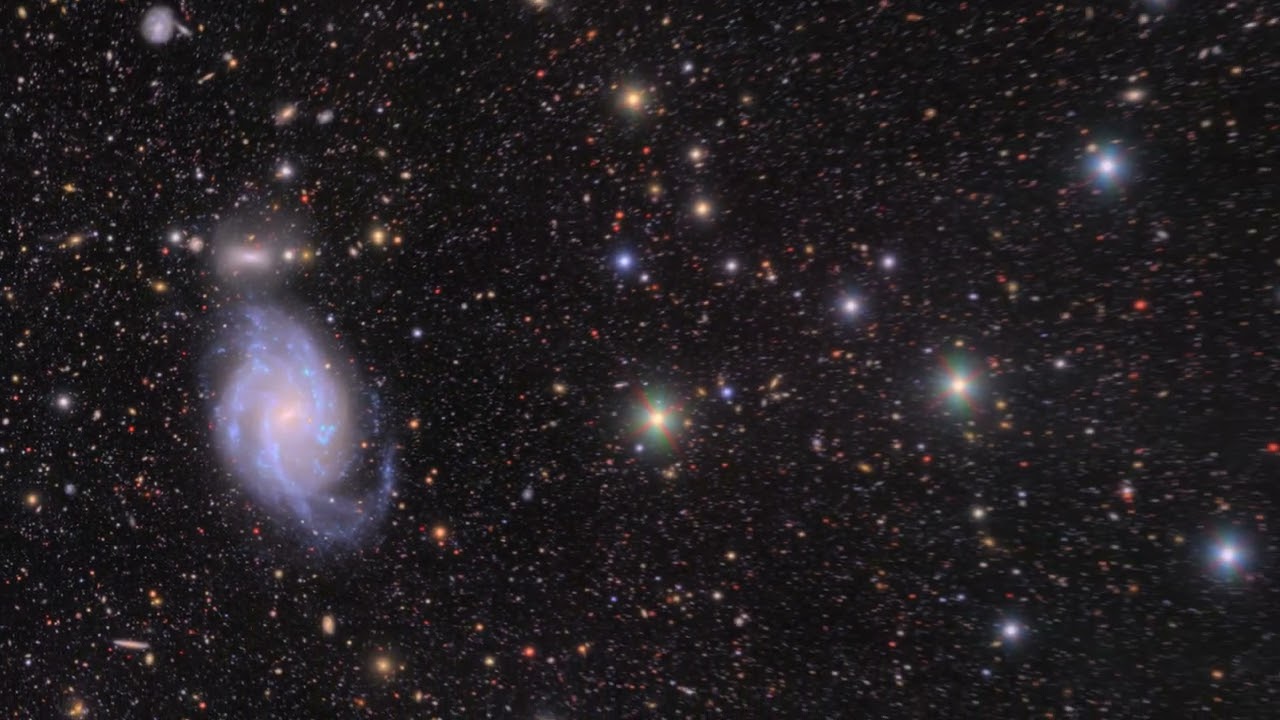
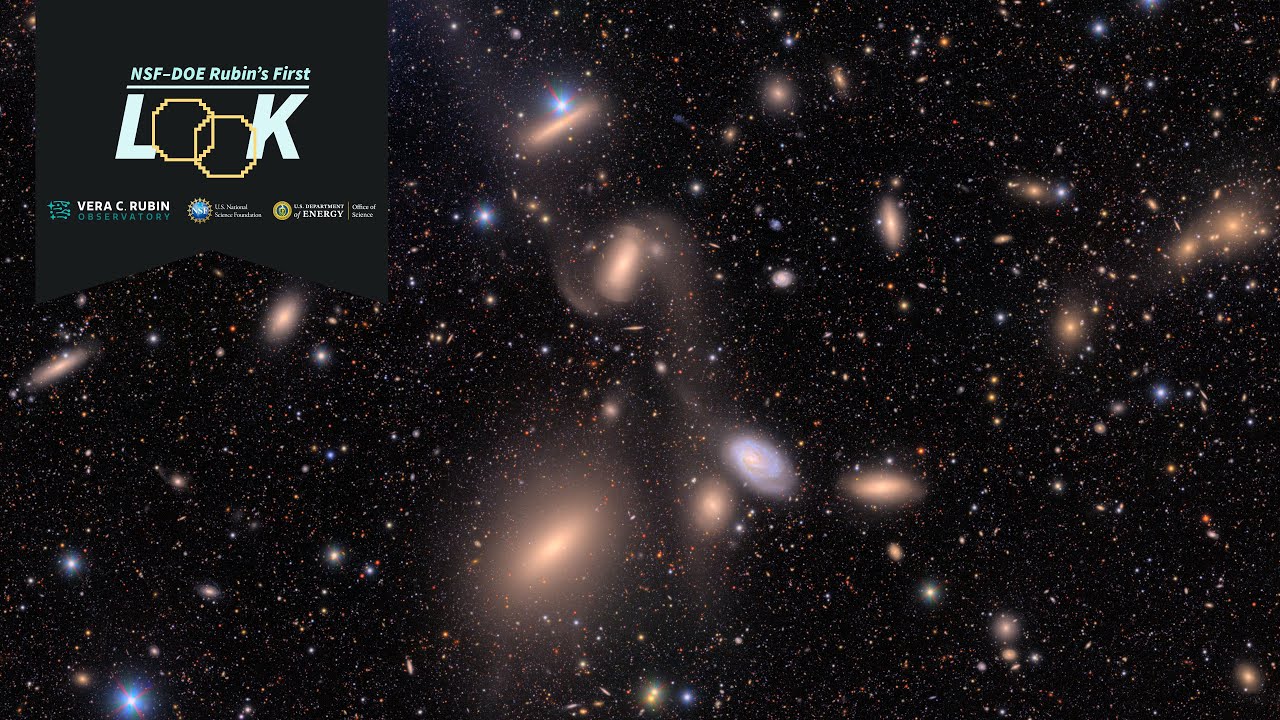
This teaser comes from a longer video that was produced from over 1,100 images captured by the Vera C. Rubin Observatory. It begins with a close-up of a spiral galaxy then zooms out to reveal about 10 million galaxies. Those 10 million galaxies are roughly 0.05% of the approximately 20 billion galaxies Rubin Observatory will capture during its 10-year Legacy Survey of Space and Time. NSF-DOE Vera C. Rubin Observatory

4 Mi Piace

La galleria di foto:

:camera: First Look Gallery


La nuova app, Skyviewer, realizzata per navigare le immagini dell’osservatorio:

:telescope: Skyviewer


:movie_camera: Video:

Made from over 1100 images captured by NSF-DOE Vera C. Rubin Observatory, the video begins with a close-up of two galaxies then zooms out to reveal about 10 million galaxies. Those 10 million galaxies are roughly .05% of the approximately 20 billion galaxies Rubin Observatory will capture during its 10-year Legacy Survey of Space and Time. Explore the Cosmic Treasure Chest.


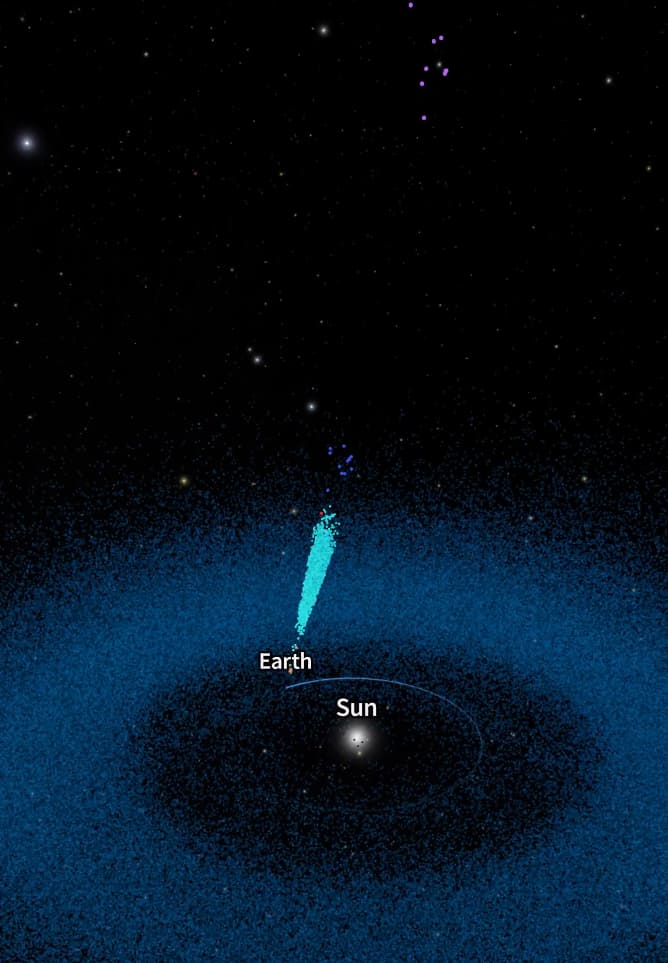
In about 10 hours of observations, NSF–DOE Vera C. Rubin Observatory discovered 2104 never-before-seen asteroids in our Solar System, including seven near-Earth asteroids (which pose no danger).


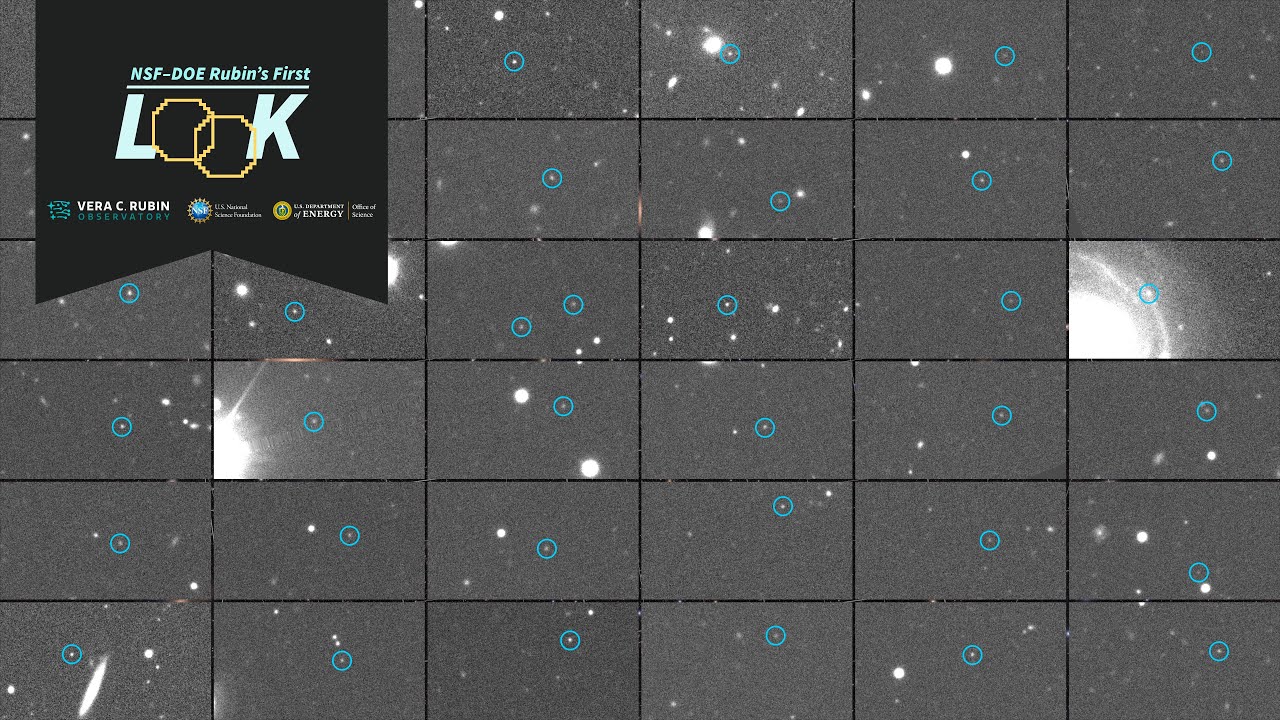
In this video, NSF–DOE Vera C. Rubin Observatory showcases 46 subtly pulsating RR Lyrae variable stars in an early glimpse of the dynamic sky Rubin will reveal.


Made from more than 678 exposures taken by NSF–DOE Vera C. Rubin Observatory in just over seven hours of observing time, this video explores details in the region containing the Trifid nebula (top) and the Lagoon nebula, which are several thousand light-years away from Earth.

5 Mi Piace

E già l’investimento è valso.

7 Mi Piace

Posto solo un’immagine, un frame di uno dei video postati da Me99 qui sopra:


Dalla Terra potete intuire dove stava osservando Vera. Gli asteroidi nuovi scoperti sono quelli in celeste, blu e viola. Una piccolissima porzione di cielo e 2000 nuovi asteroidi subito. Di solito con tutti gli altri osservatori combinati insieme se ne scoprono circa 20.000 l’anno. Le previsioni dicevano che dovrebbe arrivare a scoprire 5 milioni di nuovi asteroidi in 10 anni (non equamente distribuiti nel tempo, la maggior parte nelle fase iniziali).

12 Mi Piace

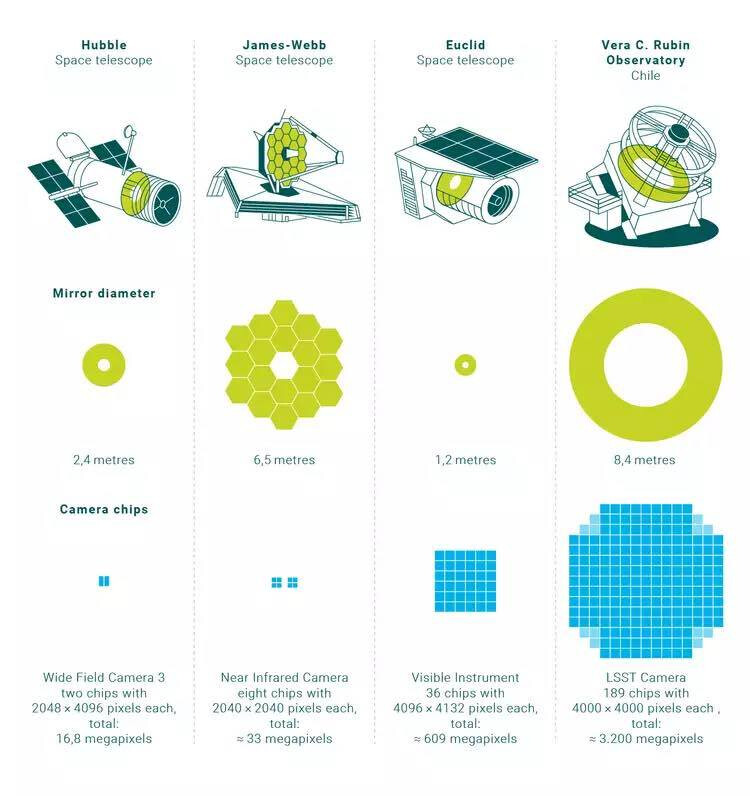
Una simpatica infografica che paragona la dimensione del sensore (molto approssimativamente) e la forma e dimensione dello specchio primario di tre telescopi spaziali e del Vera C. Rubin con la LSST.

Per chi non è del mestiere, la dimensione dello specchio fa la risoluzione angolare (a parità di lunghezza d’onda, lunghezze d’onda elevate=meno risoluzione), mentre la dimensione del piano focale fa l’area osservata in ogni esposizione, e di conseguenza il volume di dati raccolti.
In questo il Vera C. Rubin è assolutamente il capostipite di una nuova classe di telescopi.

5 Mi Piace

11mila nuovi asteroidi scoperti in un mese e mezzo, durante la fase di messa a punto. Tra questi 33 NEO e 380 transnettuniani.

:megaphone: Il comunicato stampa:

The submission to MPC comprises approximately one million observations, taken over the span of a month and a half, of over 11,000 new asteroids and more than 80,000 already known asteroids, including some that had previously been observed but were later “lost” because their orbits were too uncertain to predict their future locations.

[…] Among the newly identified objects are 33 previously unknown near-Earth objects (NEOs), which are small asteroids and comets whose closest approach to the Sun is less than 1.3 times the distance between Earth and the Sun. None of the newly discovered NEOs pose a threat to Earth, and the largest is about 500 meters wide.

The dataset also contains roughly 380 trans-Neptunian objects (TNOs) — icy bodies orbiting beyond Neptune. Two of the newly discovered TNOs — provisionally named 2025 LS2 and 2025 MX348 — have been found to be on extremely large and elongated, or stretched out, orbits. At their most distant points, these two objects reach roughly 1000 times farther away from the Sun than the Earth is, placing them among the 30 most distant minor planets known.

L’animazione con la posizione dei nuovi asteroidi:

:fox: Bonus:

4 Mi Piace

“So it begins.” (cit.)

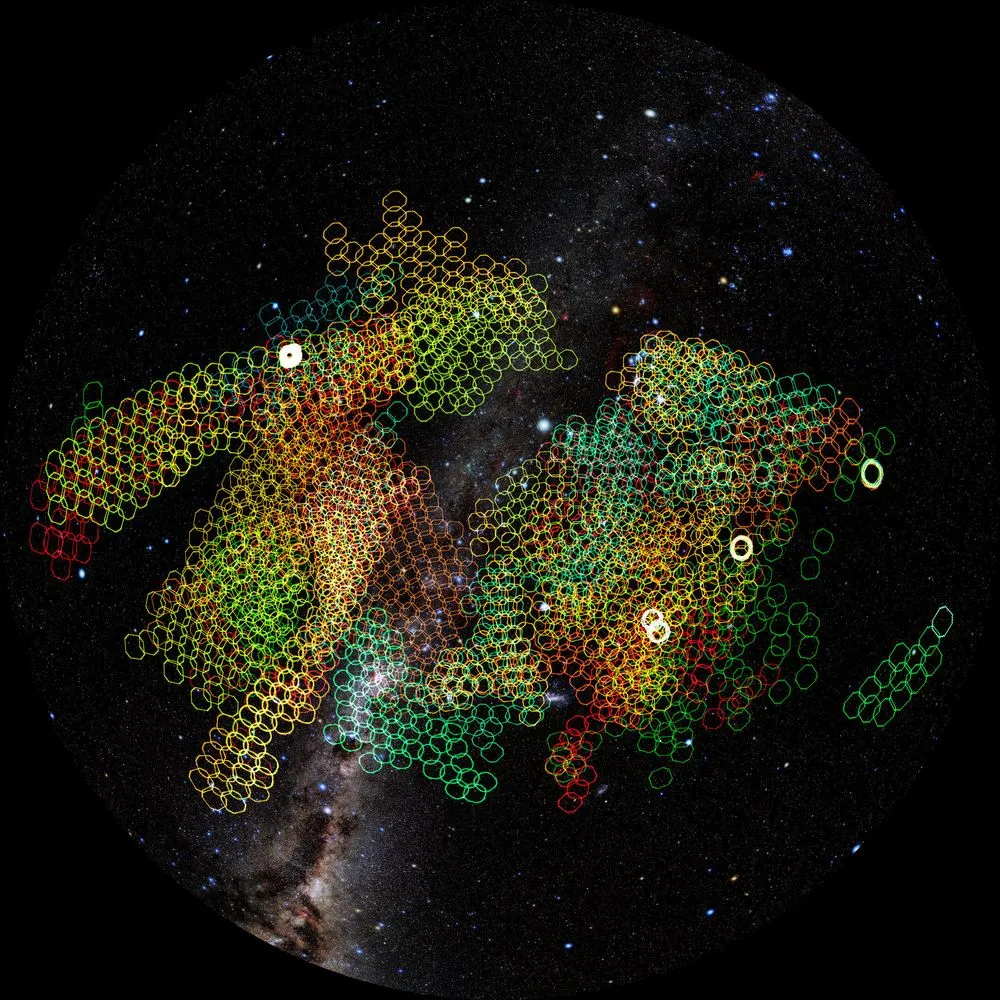
Il 29 giugno è cominciata la campagna di osservazione (LSST) del Vera Rubin.

:megaphone: Dal comunicato ufficiale:

“Today, we begin filming the greatest cosmic movie ever made,” says Brian Stone, performing the duties of the NSF Director. “This moment reflects decades of vision, innovation, and the power of federal investment in science through the U.S. National Science Foundation and the Department of Energy. Every night, NSF–DOE Rubin Observatory will expand the frontiers of knowledge and strengthen America’s global leadership in science and innovation.”

[…] When the LSST is complete, the final dataset will contain billions of objects with trillions of measurements, all accessible through regular data releases. This is the first time so much astronomical data will be available to so many people, opening the door to new kinds of discovery by both scientists and the public. Rubin invites anyone in the world to engage with its data and explore the dynamic Universe in ways never before possible.


A circular sky map against a black background showing a dense field of stars and the glowing, dusty diagonal band of the Milky Way galaxy. Overlaid on the sky are hundreds of overlapping, colorful hexagonal tiles clustered across the central and outer regions of the view. The tiles form a sprawling, interconnected network color-coded in vibrant shades of green, yellow, orange, red, and teal. A few distinct, thick white circles are scattered within the colorful tile patterns, highlighting areas imaged much more frequently.

1 Mi Piace