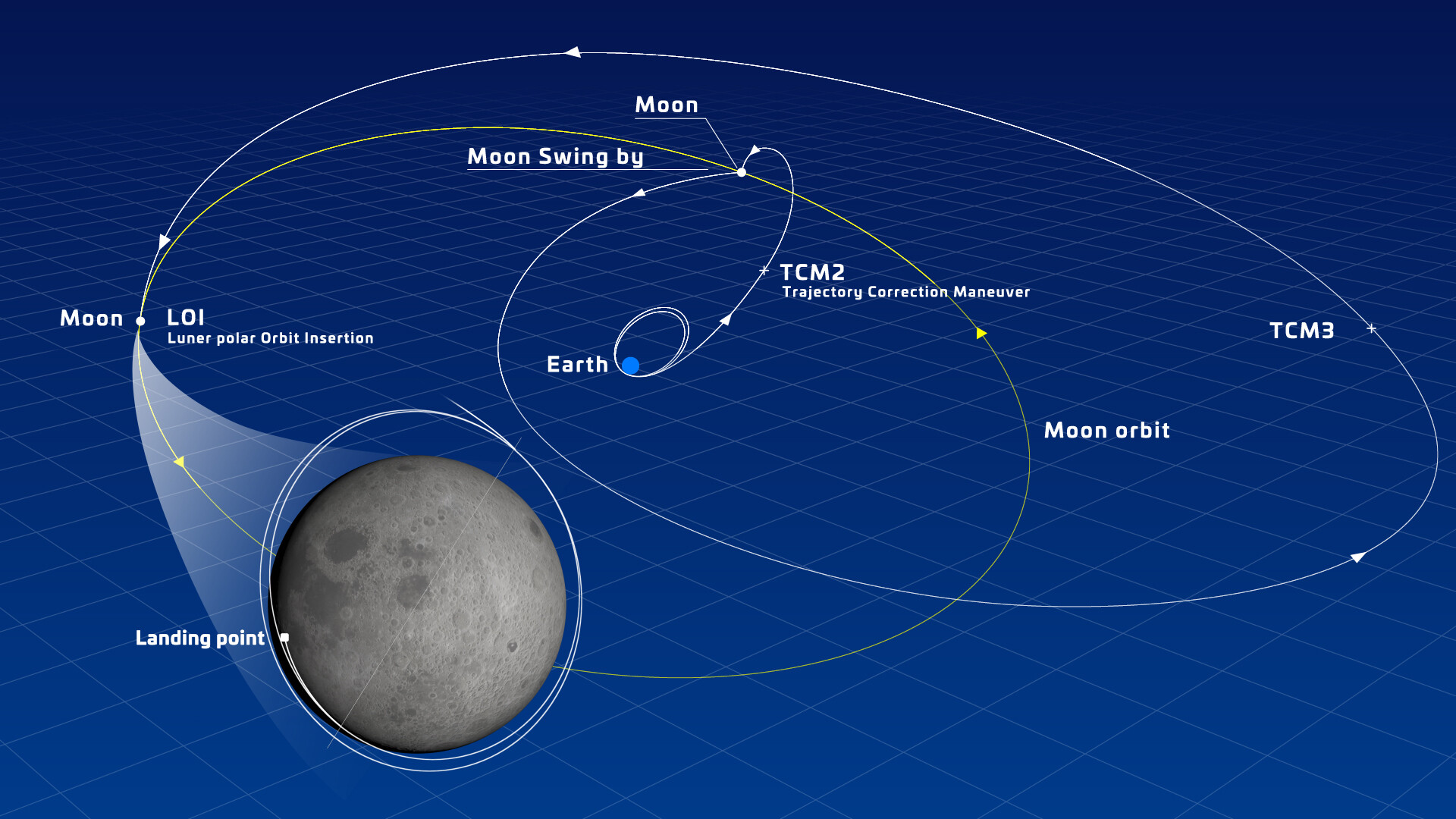
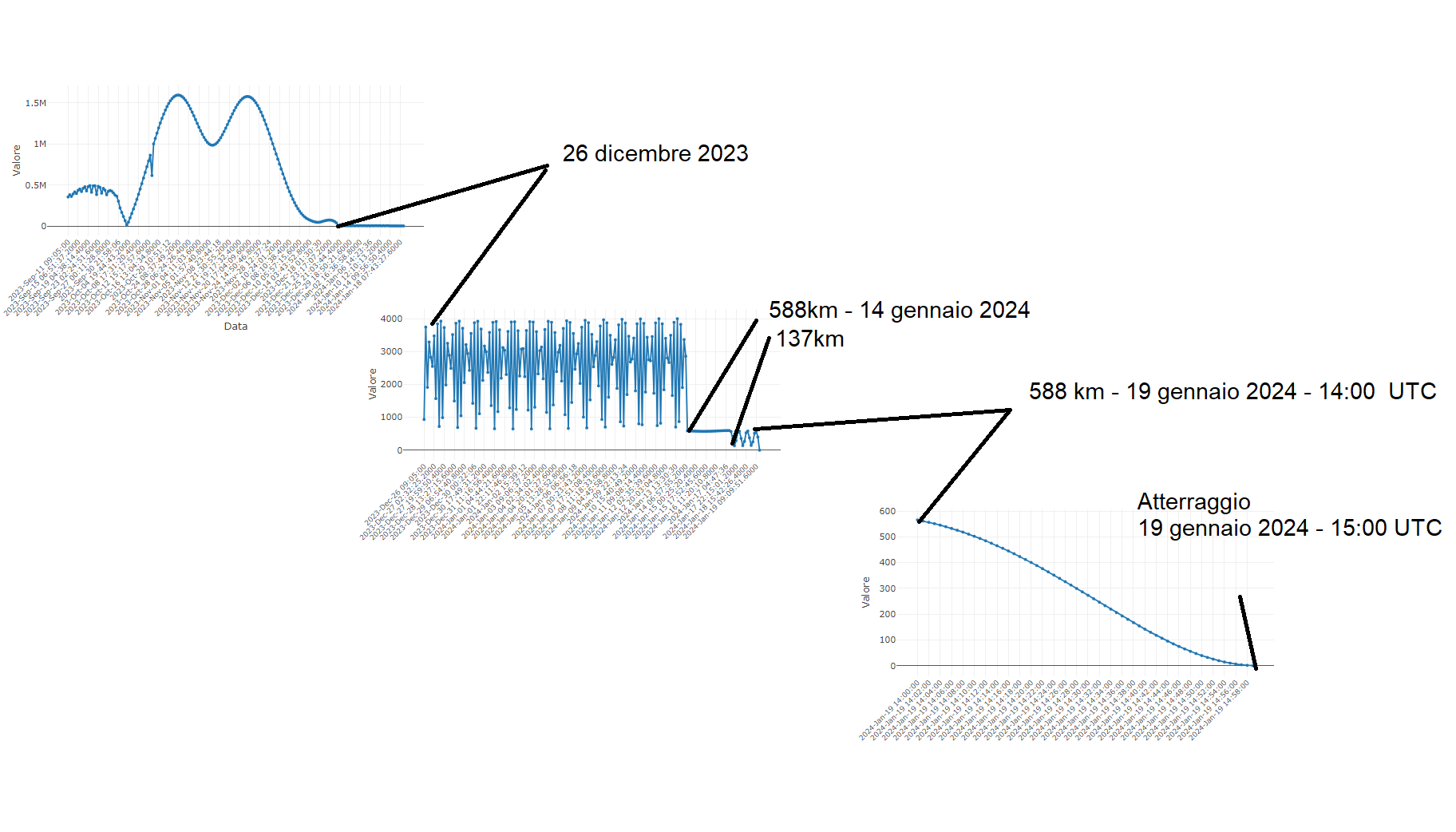
L’atterraggio di SLIM, visto che se ne parlava.
https://twitter.com/CNSpaceflight/status/1692822606003704048?s=20
L’atterraggio di SLIM, visto che se ne parlava.
https://twitter.com/CNSpaceflight/status/1692822606003704048?s=20
Lancio anticipato di 23 giorni, 17 minuti, 49 secondi, a NET September 6, 2023 11:42:11 PM
Diretta del rollout in corso:
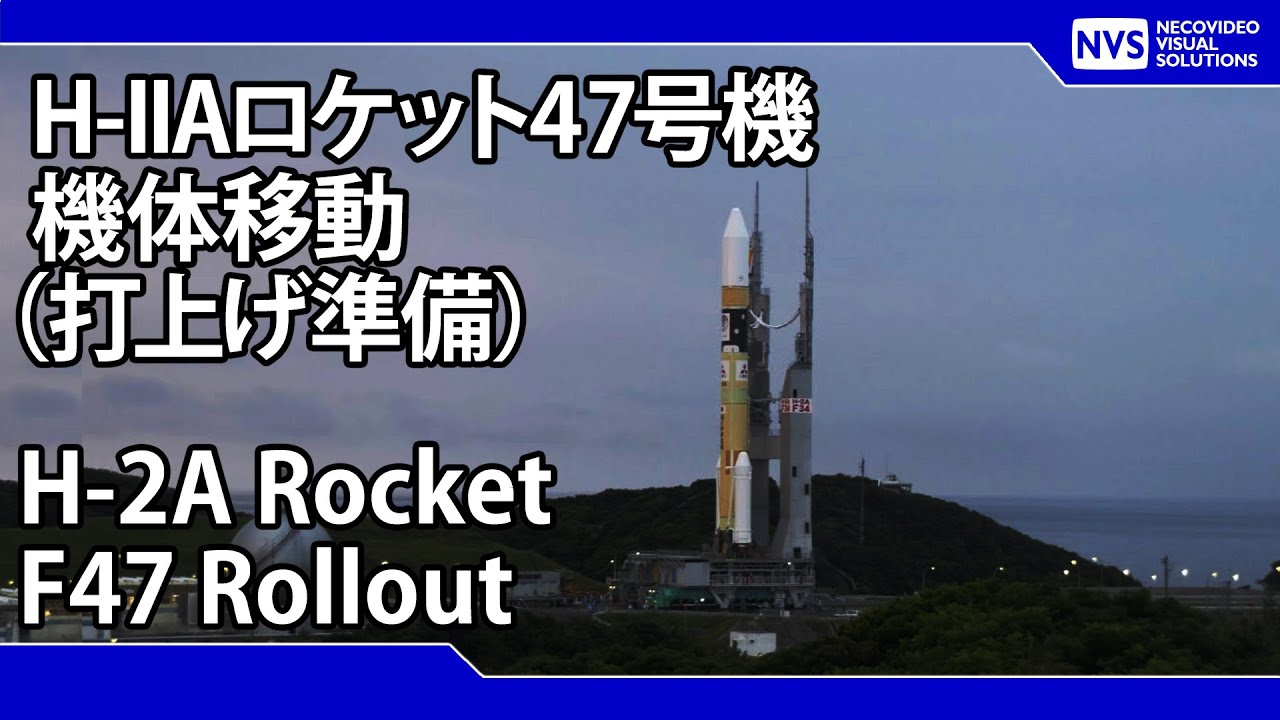
per seguire questa missione abbiamo aperto la chat del forum, bar regolite.
Ottima info grafica
https://x.com/spaceintel101/status/1699348636201529656?s=46&t=z-h1qp9R4aE0mP7M875I6Q
Lancio avvenuto con successo. Xrism è già in orbita, slim verrà rilasciato dopo un’altra accensione del secondo stadio.
https://twitter.com/CNSpaceflight/status/1699572915153608759?t=0WFnF_YQq5TxA812eL2pEw&s=19
SLIM pure è in orbita. La strada è lunga, credo ci vorranno 6 mesi, molto più di CASPTONE o Chandrayaan-3 per capirci.
Segnalo un articolo simpatico su SORA-Q che ho scoperto essere prodotto da una azienda di giocattoli (e ovviamente già in vendita nei migliori negozi).
I think Japan’s approach to the new moon race is better symbolized by a tiny rover being carried aboard SLIM. It’s called SORA-Q. It is a baseball-sized sphere that will “transform” into operational mode upon hitting the lunar surface, then scuttle around taking photos and video. It isn’t the product of an industrial-military complex, but rather a toy company, Takara Tomy .
To summarize, it’s the first lunar rover, and probably first aerospace technology of any kind, designed by a toy company, which is pretty cool. It incorporates technologies from the Transformers and Zoids toylines, which is even more fun . And unlike the boxy, utilitarian rovers of other nations, it has style. In fact, it’s downright cute. When you watch the little thing hustle through the sand, it’s impossible not to cheer it on. Other countries have launched things to the moon, but none so kawaii. …
And in a certain sense, even without having landed yet, Japan is already beating other, fiercer competitors when it comes to commercializing its moon program. Takara Tomy is selling working models of SORA-Q on its website. … and the consumer edition of SORA-Q isn’t so much a model as it is a duplicate of the one on the moon (albeit made out of aluminum, rather than the aerospace grade titanium of the real deal.)

Qui un articolo del New Yorker, dallo stesso autore, con interviste ai progettisti:
“The idea of making a design with the smallest number of motors, in reducing the number of components to the bare minimum—as a toy company, this is something we have been doing for a long time,” Yoneda said. “The initial idea, as we understood it from jaxa , was for a bug-like design that could move around on its own.”
Yoneda and his team showed me three toys that helped to inspire SORA-Q prototypes. The first, an iteration of Optimus Prime, was a Transformer. The second, a boxy little i-Sobot, could be remotely controlled and held a Guinness World Record for the smallest mass-produced humanoid robot. The third, a feline Zoid called Liger Zero, walked on battery power. The team quickly abandoned the idea of using legs, which seemed too complex and fragile, and instead focussed on a spherical design. SORA-Q vaguely resembles a “Star Wars” droid, but its appearance has more to do with physics than pop culture. “After exploring many options, we realized that a ball represented the smallest possible shape,” Yoneda told me.
Distanza dalla Luna, dati NASA Horizons (id SLIM: -240):
La miglioria è l’eliminazione di quel picco anomalo che si vede al 13 ottobre 2023.
Nell’animazione si vede la Terra muoversi leggermente. Questo è dovuto al fatto che l’origine del sistema di riferimento non è il centro della Terra ma il baricentro del sistema Terra-Luna.
Aggiungo che abbiamo avvisato il JPL di questa anomalia e ha eliminato dal sito le effemeridi con data successiva al A.D. 2023-OCT-07 00:01:09.1840
non credo sia per quello, anche con chandrayaan 3 a un certo punto sono scomparsi i dati oltre una certa data e li aggiornavano giorno per giorno, e quelli di SLIM li hanno messi, tolti e modificati più volte negli ultimi giorni, man mano che cambiava la data di lancio.
Sì che è per quello, sono in contatto con loro, gli ho segnalato il problema stamattina e mi hanno risposto subito, dicendo che le tolgono dal sito.
Perchè allora non chiedete a Giordini anche se può sistemare l’antico bug del tempo solare/siderale? Il manuale di Horizons dice che si può calcolare su qualunque corpo celeste per il quale è noto il modello rotazionale, e un paio d’anni fa Giorgini mi disse che se ne era dimenticato, ma era nella lista delle 2000 cose da fare… ma il bug è ancora lì: le quantità 7 e 34 dànno N/A per qualunque corpo celeste diverso dalla Terra, invece sarebbe interessante sapere l’ora nei luoghi di atterraggio su Luna e Marte.
Nuovo articolo di Luca Frigerio pubblicato su AstronautiNEWS.it.
55 messaggi sono stati spostati in un nuovo Argomento: SLIM Mission Log
Inizia il business as usual per Xrism, è iniziato anche il rilascio dei dati:
Anche XRISM ha osservato 3I/ATLAS.
X-ray image of the comet captured by the soft X-ray imaging telescope Xtend. The image is created from quick-look processed data. The Xtend field of view covers a region of about 3 million km2, revealing a faint emission structure extending about 400,000 km around the comet. (Credit: JAXA)
Il comunicato di JAXA.
A preliminary analysis of the obtained data, after reconstructing images centered on the comet, revealed a faint X-ray glow extending roughly 5 arcminutes—corresponding to a distance of 400,000 km—around the cometary nucleus, as shown in Figure 2. This extent is difficult to explain solely by the blur due to XRISM’s imaging performance, suggesting the possibility of a diffuse cloud of gas surrounding the comet and faintly glowing in X-rays over several hundred thousand kilometers. However, similar structures can arise from instrumental effects such as vignetting2 or detector noise, so more careful analysis is required before confirming the emission as truly cometary in origin.
 Ping: 3I/ATLAS: nuovo oggetto interstellare
Qualche giorno fa era uscita la notizia che XRISM ha osservato per la prima volta cloro e potassio nei resti di una supernova.
 Il comunicato di NASA:
“This discovery helps illustrate how the deaths of stars and life on Earth are fundamentally linked,” said Toshiki Sato, an astrophysicist at Meiji University in Tokyo. “Stars appear to shimmer quietly in the night sky, but they actively forge materials that form planets and enable life as we know it. Now, thanks to XRISM, we have a better idea of when and how stars might make crucial, yet harder-to-find, elements.”
 Il paper: