Credit: CSS, D. Rankin. CC BY-SA 4.0
Video / animazione nei tweet:
Credit: CSS, D. Rankin. CC BY-SA 4.0
Video / animazione nei tweet:
Sarebbe bello avere le effemeridi, anche se mi sembra di capire che sia osservabile solo dall’emisfero sud. Stanotte sarà nuvolo, ma domani forse no…
JPL Horizons per adesso lo ignora
Se confermato magari potranno determinare delle statistiche un po’ meno approssimative sulla densita’ di questo tipo di oggetti, forse non sono cosi’ rari e quindi il vuoto la fuori non e’ cosi’ vuoto…
Poi sembra che abbiano origini e caratteristiche diverse, ma forse e’ un po’ presto. Ho capito bene che potrebbe avere un accenno di coda (hanno scritto outburst)?
Bello che l’abbiano scoperto presto e debba avvicinarsi parecchio.
L’oggetto è stato designato come 3I/ATLAS.
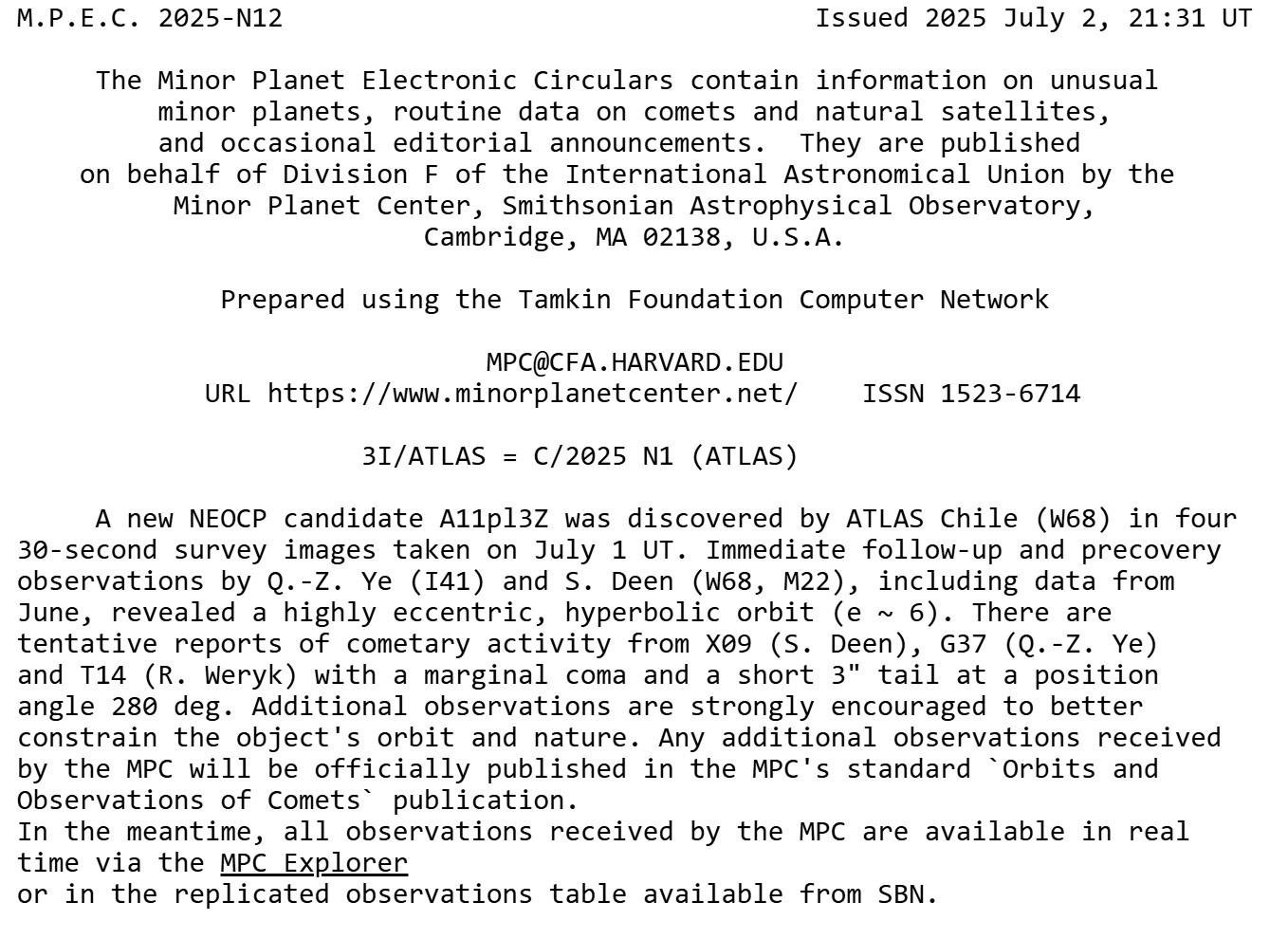
da: https://minorplanetcenter.net/mpec/K25/K25N12.html
Il comunicato di NASA.
Osservazione in diretta (sera del 3 luglio):
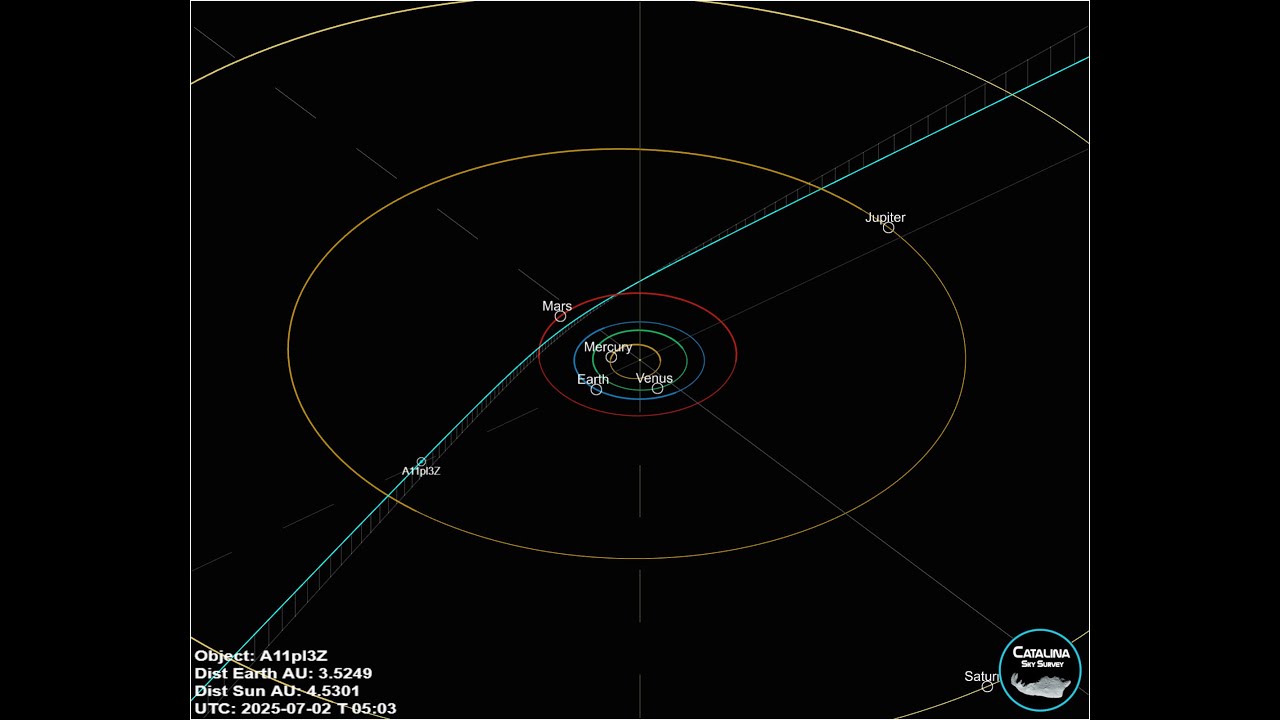
Video del JPL:
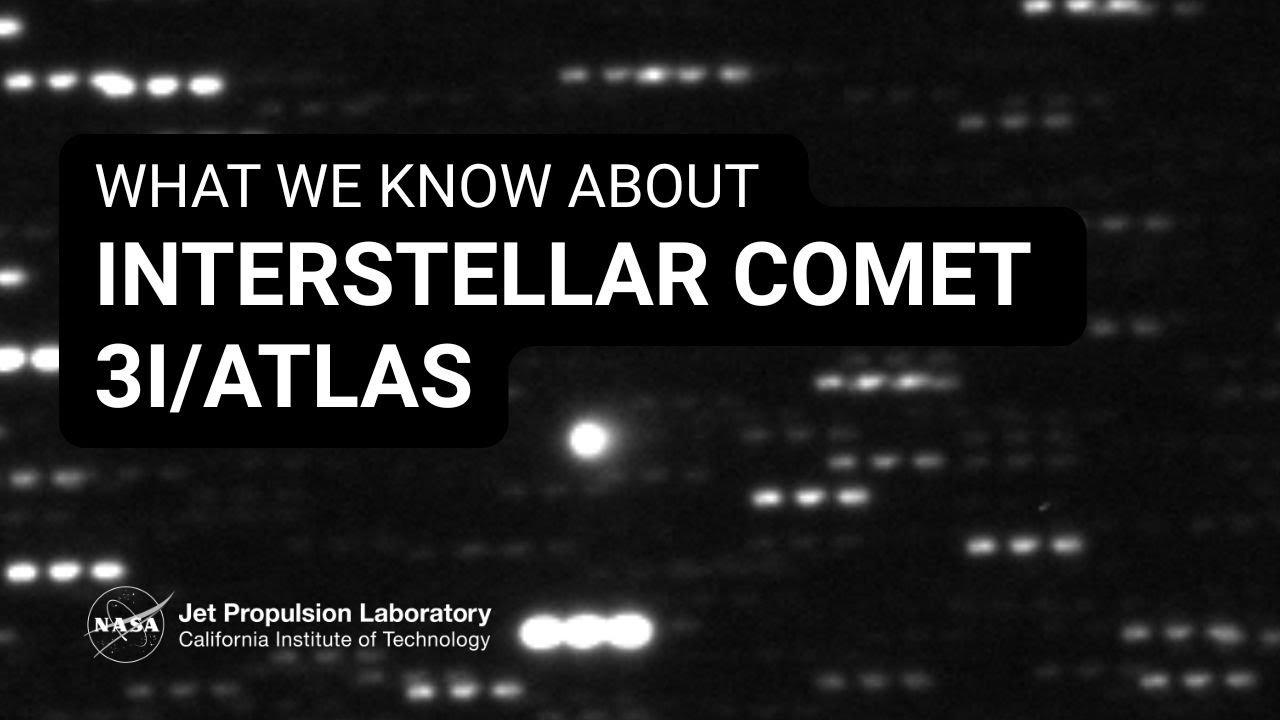
Scott Manley:
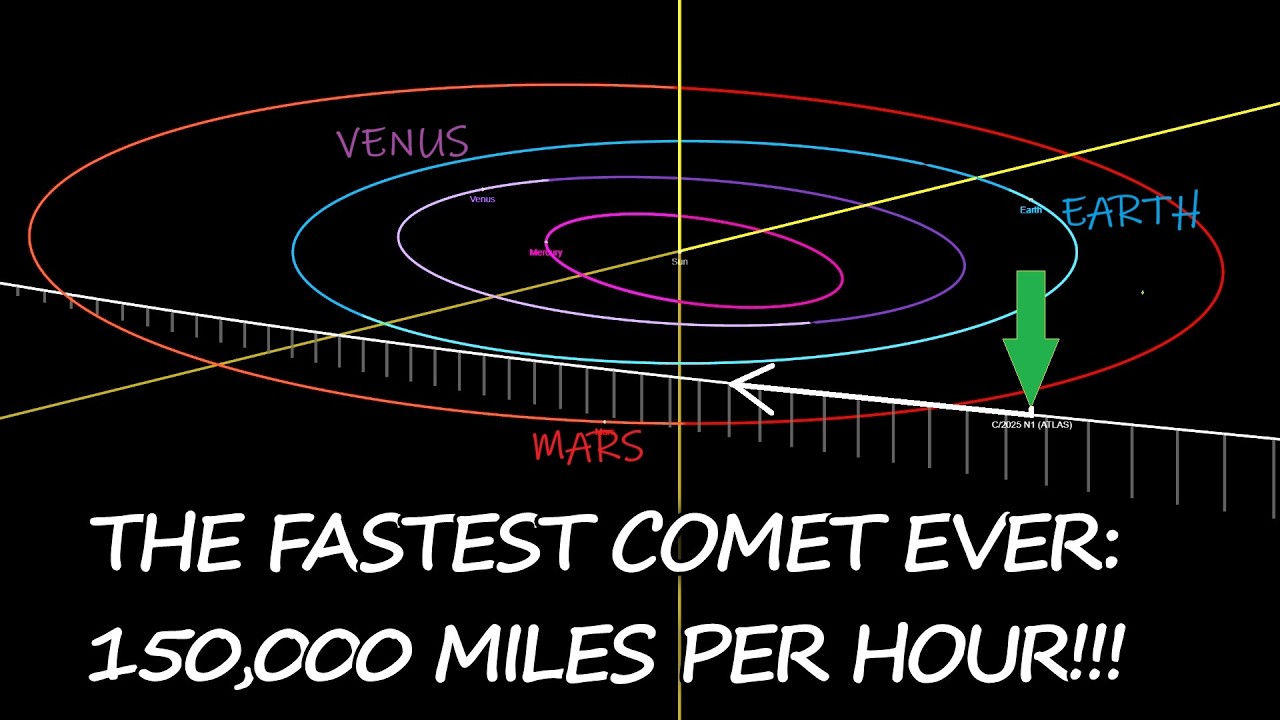
In SI e’ ancora piu’ cifra tonda, quasi 100mila km/h.
Ovviamente una ipotetica missione verso un oggetto con traiettoria cosi’ iperbolica forse sarebbe possibile solo andandogli incontro, inseguirlo o fare rendez vous era gia’ molto problematico per 1I e 2I, i delta V necessari per 3I sarebbero completamente fuori portata con le attuali tecnologie.
Comunque la velocita’ di fuga dalla galassia credo sia nell’ordine dei 1.000.000 km/h per avere un oggetto intergalattico bisogna salire ancora di un ordine di grandezza e quelli si che saranno rarefatti se non altro perche’ distribuiti su uno spazio enorme.
Non ho ancora potuto ascoltare i video mi scuso quindi per eventuali ripetizioni e probabili inesattezze anche spannometriche.
Qui dicono che va “solo” a 60km al secondo.
Ovviamente dipende dal punto della traiettoria, mi pare di ricordare che c’era un concetto tipo “velocita’ asintotica” o una roba simile, ovvero la velocita’ residua dell’oggetto una volta che si e’ molto allontanata dal sistema solare.
The comet is moving at nearly 37 miles per second (60 kilometers per second) — or 133,200 miles per hour (about 214,364 kilometers per hour) — too fast to be a “local” object in our solar system, said Teddy Kareta, an assistant professor at Villanova University near Philadelphia.
Guarda il video di scott manley, fa una bella analisi in proposito
Visto, come al solito grandi contenuti in pochissimo tempo dopo l’evento, irrisoria la piccola sfilacciatura sull’eccentricita’ nonostante si sia scusato tanto nei commenti.
Comunque ci ha fatto capire che una missione anche solo fi flyby su un oggetto interstellare e’ una cosa molto tosta e molto ai limiti.
Mi chiedo se non sarebbe utile un giorno avere un telescopio su un’orbita solare diversa, per diverso parallasse , diversi momenti di invisibilita’ solare e possibile minore distanza da eventi astronomici, es. il passaggio di una cometa o un asteroide. L3 e L4 permetterebbero comunicazioni senza interruzione e invisibilita’ solare non sovrapposta, oppure orbite solari interne o retrograde.
3I/ATLAS visto dal VLT.
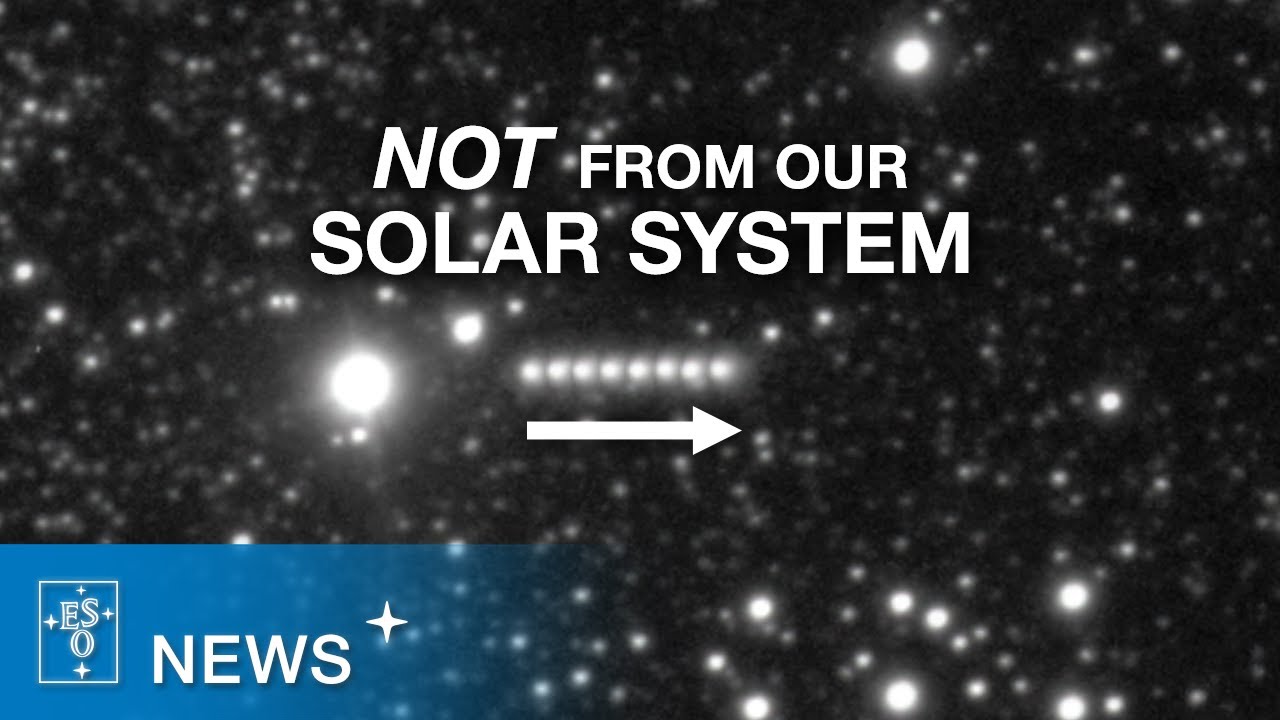
In this VLT timelapse, 3I/ATLAS is seen moving to the right over the course of about 13 minutes. These data were obtained with the FORS2 instrument on the VLT on the night of 3 July 2025, just two days after the comet was first discovered. The data were made immediately public through the ESO archive.
At the end of the video, we see all frames stacked into a single image: the deepest and best to date we have of this foreign object.
La pagina con il comunicato e altre info.
Intanto sono usciti i primi paper.
 Discovery and Preliminary Characterization of a Third Interstellar Object: 3I/ATLAS
Interstellar comet 3I/ATLAS: discovery and physical description
Initial VLT/MUSE spectroscopy of the interstellar object 3I/ATLAS
#Serendipity: il Vera Rubin ha osservato del tutto casualmente 3I/ATLAS dieci giorni prima della sua scoperta, durante la fase di validazione scientifica.
Paper:
NSF-DOE Vera C. Rubin Observatory Observations of Interstellar Comet 3I/ATLAS (C/2025 N1)
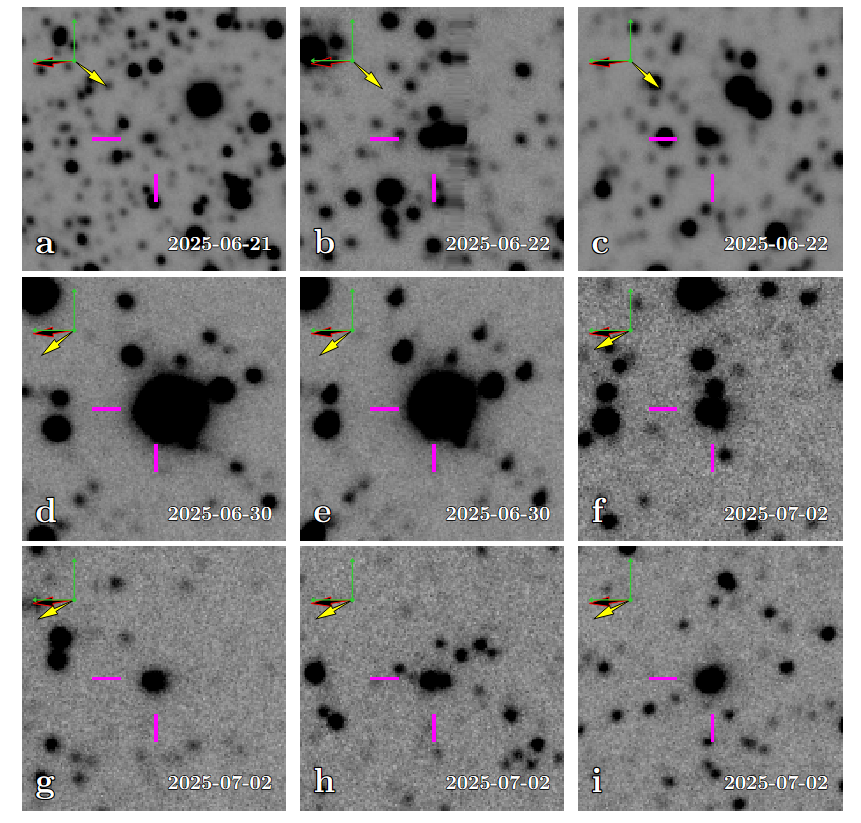
We report on the observation and measurement of astrometry, photometry, morphology, and activity of the interstellar object 3I/ATLAS, also designated C/2025 N1 (ATLAS), with the NSF-DOE Vera C. Rubin Observatory. The third interstellar object, comet 3I/ATLAS, was first discovered on UT 2025 July 1. Serendipitously, the Rubin Observatory collected imaging in the area of the sky inhabited by the object during regular commissioning activities. We successfully recovered object detections from Rubin visits spanning UT 2025 June 21 (10 days before discovery) to UT 2025 July 7. Facilitated by Rubin’s high resolution and large aperture, we report on the detection of cometary activity as early as June 21st, and observe it throughout.
Gallery of serendipitous observations of 3I/ATLAS from the NSF-DOE Vera C. Rubin Observatory
Ping al thread sul Vera Rubin:
Questa ricerca dimostra il valore dello strumento, cioè quello per cui è stato progettato.
Suggerisce anche che nei dati che abbiamo ci sono tante cose non viste
Beh, questo è ovvio. Ed è vero per qualunque missione che raccoglie grandi quantità di dati. Immagina cosa succederà adesso con l’inizio delle operaizoni scientifiche del Vera Rubin, letterelamente fiumi di dati, dozzine di TB per notte di osservazione.
Ci saranno programmi di filtro, ricerche con l’AI… tanta roba!
Il paper con le osservazioni del JWST.
[…] The spectral images (spanning 0.6-5.3 µm) reveal a CO2 dominated coma, with enhanced outgassing in the sunward direction, and the presence of H2O, CO, OCS, water ice and dust. The coma CO2/H2O mixing ratio of 8.0 ± 1.0 is among the highest ever observed in a comet, and is 6.1-sigma above the trend as a function of heliocentric distance for long-period and Jupiter-family comets (excluding the outlier C/2016 R2).
Il paper con le osservazioni del VLT.
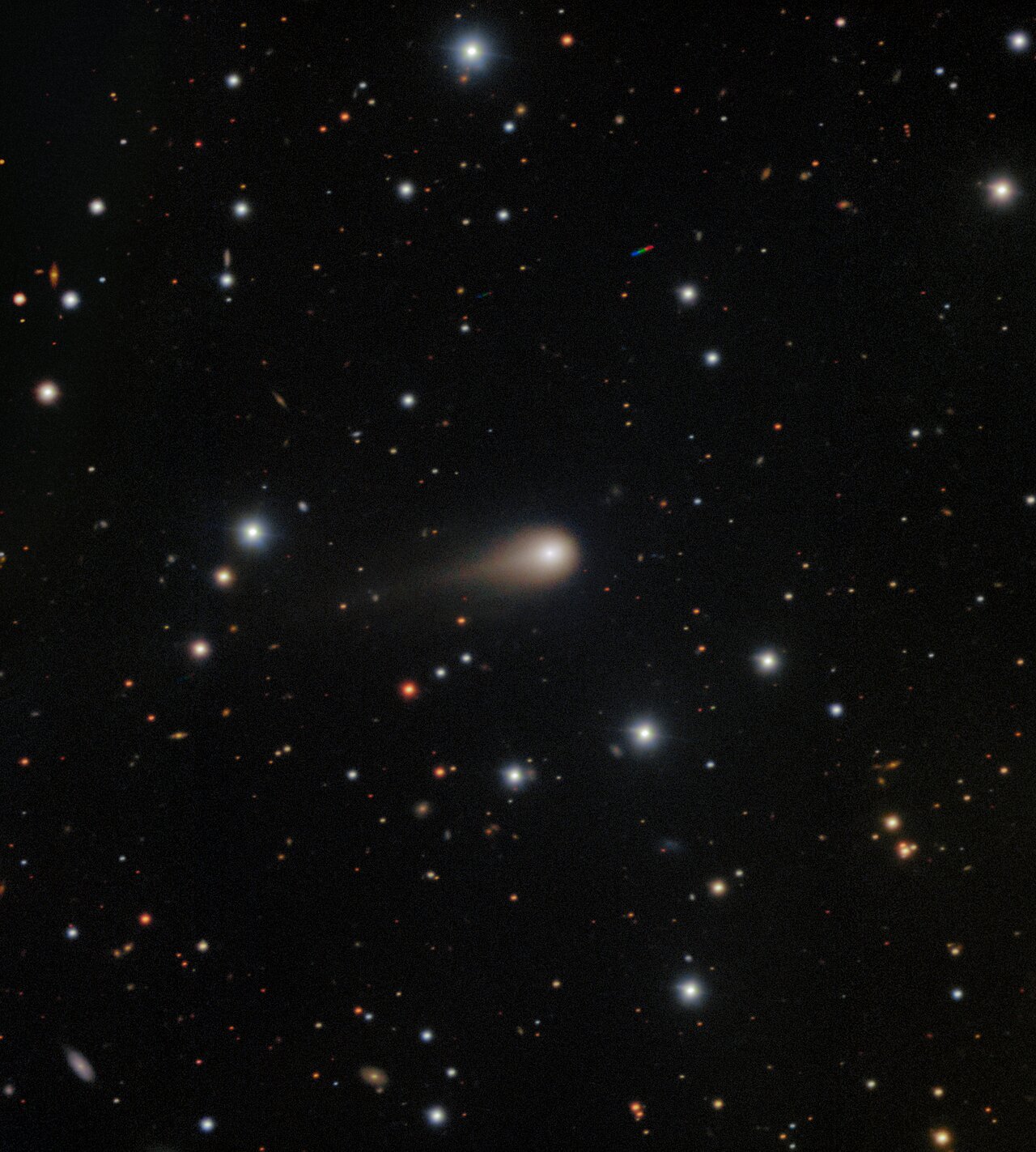
3I/ATLAS con la coda ben visibile.
Credit: International Gemini Observatory/NOIRLab/NSF/AURA/Shadow the Scientist Image Processing: J. Miller & M. Rodriguez (International Gemini Observatory/NSF NOIRLab), T.A. Rector (University of Alaska Anchorage/NSF NOIRLab), M. Zamani (NSF NOIRLab)
Il comunicato di NOIRLab.
The image shows the comet’s broad coma — a cloud of gas and dust that forms around the comet’s icy nucleus as it gets closer to the Sun — and a tail spanning about 1/120th of a degree in the sky (where one degree is about the width of a pinky finger on an outstretched arm) and pointing away from the Sun. 3I/ATLAS is only the third confirmed interstellar visitor to our Solar System.
Curiosità.
3I/ATLAS era stato osservato, del tutto casualmente, anche da TESS dal 7 maggio al 2 giugno, prima di essere scoperto ufficialmente il primo di luglio (e ancora prima di quella che fino a ora era la prima osservazione, sempre casuale, da parte del Vera Rubin, il 21 di maggio).
L’articolo da Universe Today.
We previously reported on Vera Rubin’s detection of 3I/ATLAS well before it was officially found, and now a new paper has found the interstellar object in TESS’s data going back to early May - and it looks like it may have been “active” around that time.
[…] since TESS happened to be looking at a part of the sky where 3I/ATLAS was supposed to be earlier this year, researchers Adina Feinstein and Darryl Seligman from Michigan State and John Noonan from Auburn decided to see if they could find any data on it in the telescopes archives. Turns out they could, going as far back as May 7th, 2025, over the course of two separate observational periods
Il paper:
3I/ATLAS is the third macroscopic interstellar object detected traversing the Solar System. Since its initial discovery on UT 01 July 2025, hundreds of hours on a range of observational facilities have been dedicated to measure the physical properties of this object. These observations have provided astrometry to refine the orbital solution, photometry to measure the color, a rotation period and secular light curve, and spectroscopy to characterize the composition of the coma. Here, we report precovery photometry of 3I/ATLAS as observed with NASA’s Transiting Exoplanet Survey Satellite (TESS). 3I/ATLAS was observed nearly continuously by TESS from UT 07 May 2025 to 02 June 2025.
Nuovo articolo di Simone Montrasio pubblicato su AstronautiNEWS.it.
La NavCam di Perseverance ha ripreso un oggetto luminoso nel cielo marziano, potrebbe essere la nostra 3I/Atlas, ma a causa dello shutdown federale, al JPL non c’è nessuno che lo può confermare!
Mi ricorda lo storico episodio di quando, dopo aver saputo che Gagarin era in volo, il giornalista John Warner telefonò in piena notte statunitense a Shorty Powers (PAO del programma Mercury) per un commento e lui rispose “Stiamo dormendo qui!”.

3I/ATLAS visto dal Trace Gas Orbiter di ESA
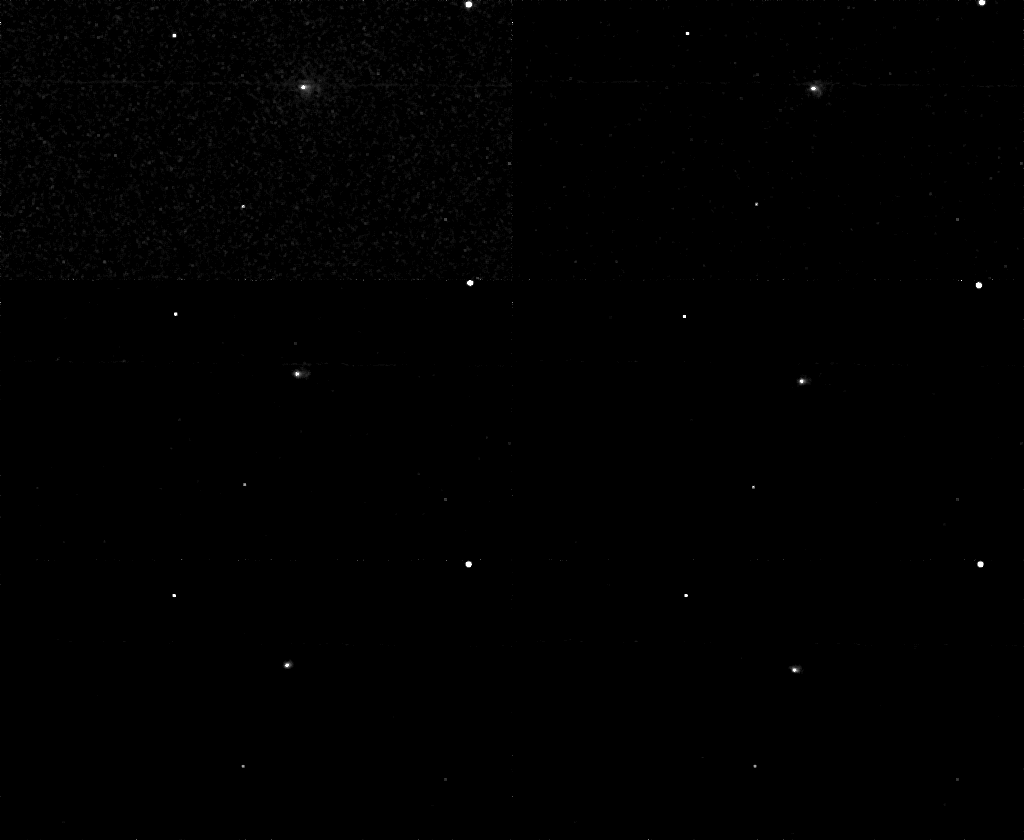
Credit: ESA/TGO/CaSSIS
Il link alla GIF:
 ExoMars Trace Gas Orbiter observes comet 3I/ATLAS – GIF
Il comunicato di ESA:
ExoMars TGO captured the series of images shown in the GIF below with its Colour and Stereo Surface Imaging System (CaSSIS). Comet 3I/ATLAS is the slightly fuzzy white dot moving downwards near the centre of the image. This dot is the centre of the comet, comprising its icy-rocky nucleus and its surrounding coma.
CaSSIS could not distinguish the nucleus from the coma, because 3I/ATLAS was too far away. Imaging this kilometre-wide nucleus would have been as impossible as seeing a mobile phone on the Moon from Earth.
But the coma, measuring a few thousand kilometres across, is clearly visible. The coma is created as 3I/ATLAS approaches the Sun. The Sun’s heat and radiation is bringing the comet to life, causing it to release gas and dust, which collects as this halo surrounding the nucleus.
Mars Express:
3I/ATLAS has not yet revealed itself in the Mars Express images, partly because these were taken with an exposure time of just 0.5 seconds (the maximum limit for Mars Express) compared to five seconds for ExoMars TGO.
Juice:
Next month, we will observe the comet with our Jupiter Icy Moons Explorer (Juice). Though Juice will be further from 3I/ATLAS than our Mars orbiters were last week, it will see the comet just after its closest approach to the Sun, meaning that it will be in a more active state. We don’t expect to receive data from Juice’s observations until February 2026.