Penso sarebbe utile avere un thread in cui raccogliere materiale sull’impiego di intelligenze artificiali specializzate nel contesto spaziale - sia in ambito astronomico che astronautico.
L’idea sarebbe di concentrarsi su AI progettate per svolgere compiti specifici (analisi di dati astrofisici, controllo di sistemi di bordo, pianificazione autonoma di missioni, ecc.), evitando gli articoli più speculativi o futuristici (es. AI “senzienti” / AGI - Artificial General Intelligence spedite nello spazio profondo) o quelli che parlano di AI “generaliste” (es ChatGPT, Grok e simili).
Segnalo un primo articolo dal sito del JPL che spiega come la NASA stia valutando l’impiego dell’AI sui satelliti da osservazione terrestre.
In a recent test, NASA showed how artificial intelligence-based technology could help orbiting spacecraft provide more targeted and valuable science data. The technology enabled an Earth-observing satellite for the first time to look ahead along its orbital path, rapidly process and analyze imagery with onboard AI, and determine where to point an instrument. The whole process took less than 90 seconds, without any human involvement. […]
The first of a series of flight tests occurred aboard a commercial satellite in mid-July. The goal: to show the potential of Dynamic Targeting to enable orbiters to improve ground imaging by avoiding clouds and also to autonomously hunt for specific, short-lived phenomena like wildfires, volcanic eruptions, and rare storms.
Il paper relativo:
 Flight of Dynamic Targeting on CogniSAT-6 - Update
Dynamic targeting (DT) is a spacecraft autonomy concept in which lookahead sensor data is acquired and rapidly analyzed and used to drive subsequent observation. We describe the Low Earth Orbit application of this approach in which lookahead imagery is analyzed to detect clouds, thermal anomalies, or land use cases to drive higher quality near nadir imaging. Use cases for such a capability include: cloud avoidance, storm hunting, search for planetary boundary layer events, plume study, and beyond. The DT concept requires a lookahead sensor or agility to use a primary sensor in such a mode, edge computing to analyze images rapidly onboard, and a primary followup sensor. Additionally, an inter-satellite or low latency communications link can be leveraged for cross platform tasking. We describe implementation in progress to fly DT in late Spring 2025 on the CogniSAT-6 (Ubotica/Open Cosmos) spacecraft that launched in March 2024 on the SpaceX Transporter-10 launch.
Ping:
 [2024-03-04] Falcon 9 Block 5 | Transporter 10 (Dedicated SSO Rideshare)
E un secondo articolo direttamente dal sito di Google Deepmind che annuncia di aver realizzato una AI “spaziale” - AlphaEarth Foundations - che dovrebbe servire a integrare e analizzare quantità enormi di dati raccolti da satelliti diversi.
New AI model integrates petabytes of Earth observation data to generate a unified data representation that revolutionizes global mapping and monitoring […] Today, we’re introducing AlphaEarth Foundations, an artificial intelligence (AI) model that functions like a virtual satellite. It accurately and efficiently characterizes the planet’s entire terrestrial land and coastal waters by integrating huge amounts of Earth observation data into a unified digital representation, or “embedding,” that computer systems can easily process. This allows the model to provide scientists with a more complete and consistent picture of our planet’s evolution, helping them make more informed decisions on critical issues like food security, deforestation, urban expansion, and water resources.
Il paper relativo:
Unprecedented volumes of Earth observation data are continually collected around the world, but high-quality labels remain scarce given the effort required to make physical measurements and observations. This has led to considerable investment in bespoke modeling efforts translating sparse labels into maps. Here we introduce AlphaEarth Foundations, an embedding field model yielding a highly general, geospatial representation that assimilates spatial, temporal, and measurement contexts across multiple sources, enabling accurate and efficient production of maps and monitoring systems from local to global scales. The embeddings generated by AlphaEarth Foundations are the only to consistently outperform all previous featurization approaches tested on a diverse set of mapping evaluations without re-training. We will release a dataset of global, annual, analysis-ready embedding field layers from 2017 through 2024.
 Il comunicato di NASA:
 Il paper che descrive ExoMiner++:
 Il software su GitHub:
 Il comunicato sul sito di ESA:
 Alcune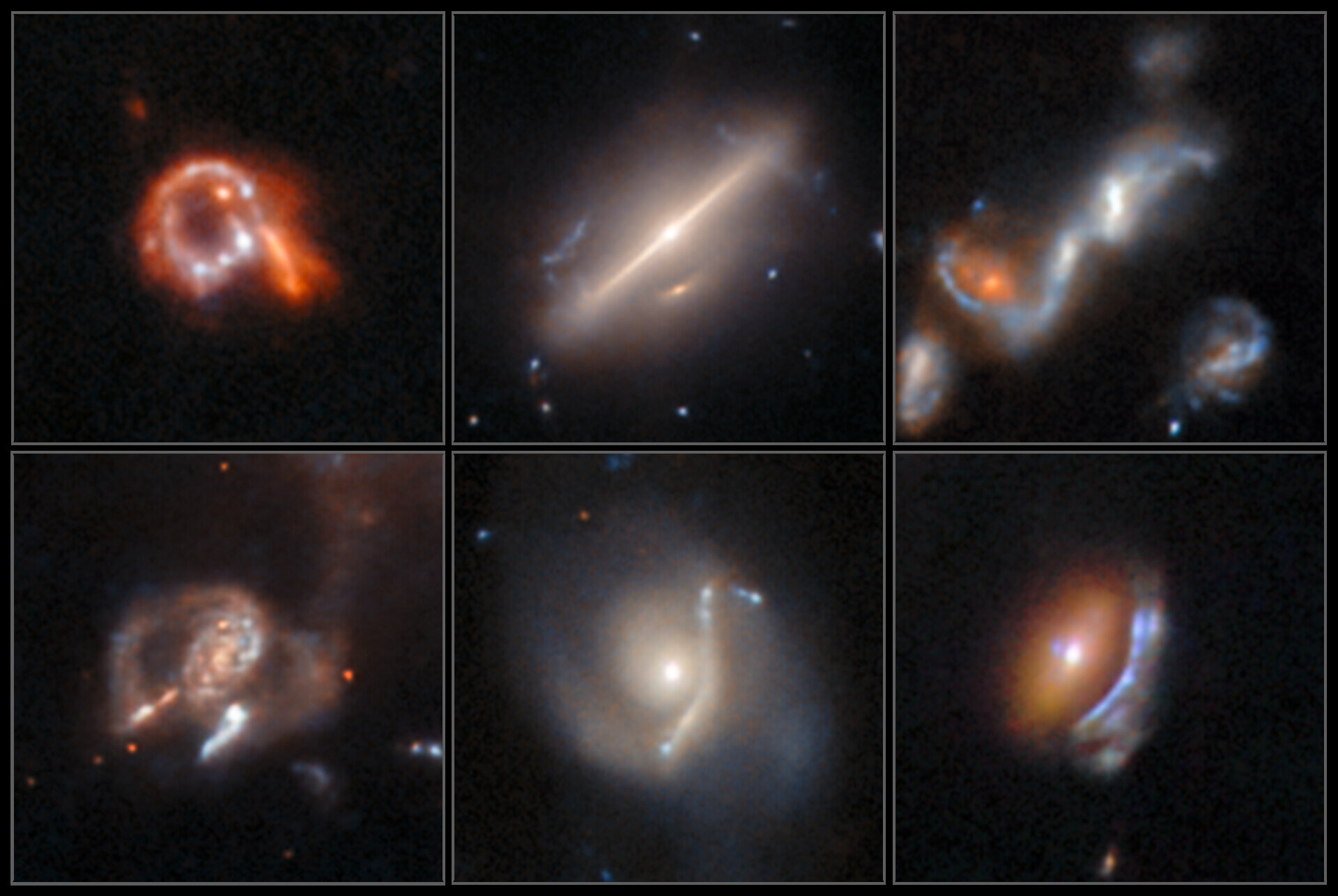
 Ping:
Ping: