Questa cosa effettivamente è da inquadrare. Se non hanno un sistema di gestione che sappia in tempo reale chi sta facendo cosa hanno un enorme problema gestionale e posso capire che ci sia una richiesta di intervento. Lavoro in una micro realtà ma tutti i giorni si segnano le ore fatte e su cosa e mensilmente si tirano le somme. È un passaggio necessario sia per sapere se ci sono lavori in rosso sia e soprattutto per capire chi rende meglio con un incarico piuttosto che un altro, e questo in grosse realtà fa fare grossissimi step, poter fare ciò che riesce meglio è il miglior efficientamento possibile dal punto di vista dell’addetto
NASA
Le voci di una chiusura della sede di Washington sono sempre più insistenti.
Da Politico:
 NASA weighs doing away with headquarters
The overhaul of the space agency, according to two people familiar with the plan, seeks to adhere to the Trump administration’s desire to cut federal spending. The proposal could affect up to 2,500 jobs and redistribute critical functions, including who manages space exploration and organizes major science missions. […]
While much of the day-to-day work occurs at NASA’s 10 centers, the Washington office plays a strategic role in lobbying for the agency’s priorities in Congress, ensuring the White House supports its agenda and partnering with foreign countries on critical space projects.
Some of the headquarter’s offices might remain in Washington, the people said, but it’s not clear which ones those would be or who would keep their jobs.
Anche nell’ipotesi IMO assai improbabile che la gestione NASA sia rimasta alle mail o poco di più, dubito che un’app costituita da un form con cinque caselle possa avere una qualche utilità; a mio avviso è molto più probabile che Petro - per sincera adesione o per evitare ritorsioni nei confronti dell’agenzia - abbia voluto mostrarsi collaborativa implementando una richiesta del DOGE.
2 Mi Piace
NASA
NASA avrebbe iniziato a sospendere e/o revocare i grant, come già NIH, NSF, etc.
Sarah Hörst, Associate Prof of planetary science alla Johns Hopkins, nonché curatrice del principale feed “astronomico” su bsky.

Clark Newman, a.i. solutions, Principal engineer for NASA Gateway Mission Design
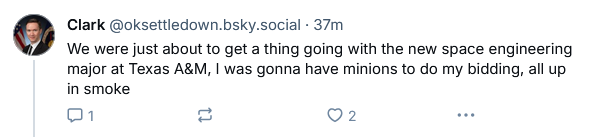
Nessun altro dettaglio o conferma per ora, anche se comunque era abbastanza prevedibile visto quanto successo nelle altre agenzie.
Edit.
NOAA
I tagli alla NOAA si sono tradotti, tra le altre cose, nella riduzione dei lanci di palloni sonda in diverse località degli Stati Uniti: alcune stazioni hanno interrotto l’attività per mancanza di personale, altre hanno dimezzato la frequenza dei lanci.
The Eyewall ha pubblicato un articolo sull’impatto che questo può avere sulle previsioni meteo. Curiosità: ho scoperto che Eric Berger è contributing editor e “certified meteorologist”.
Can’t satellites replace weather balloons? Yes and no. On one hand, satellites today are capable of incredible observations that can rival weather balloons at times. And they also cover the globe constantly, which is important. That being said, satellites cannot completely replace balloon launches. Why? Because the radiosonde data those balloon launches give us basically acts as a verification metric for models in a way that satellites cannot. It also helps calibrate derived satellite data to ensure that what the satellite is seeing is recorded correctly.
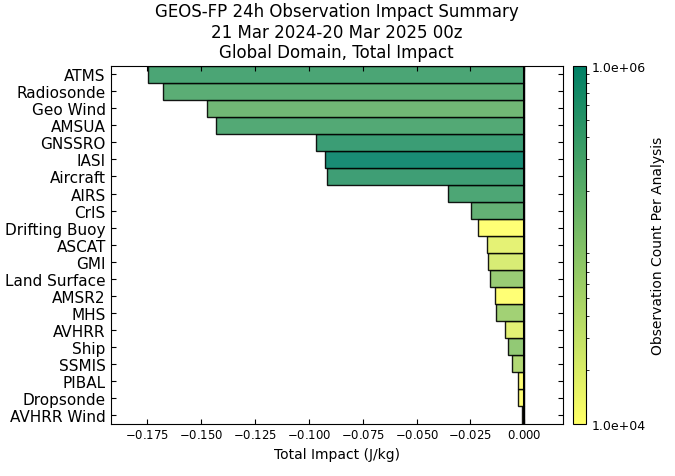
The element with the second highest impact on the NASA GEOS model? Radiosondes. Credit: NASA
SpaceX
Un articolo del New York Times sulle possibilità di SpaceX nell’amministrazione Trump. L’articolo non mi pare contenga novit๠- di fatto è una raccolta di quanto abbiamo già scritto in queste settimane - ma è comunque utile come riassunto generale. In febbraio lo stesso autore aveva scritto un pezzo sui conflitti in essere tra Musk e le varie agenzie di controllo.
SpaceX Positioned to Secure Billions in New Federal Contracts Under Trump
Elon Musk’s Business Empire Scores Benefits Under Trump Shake-Up
[1] Tranne una su Isaacman che riporto nell’apposito thread.
1 Mi Piace
NASA
Confermato.
Il comunicato di NASA riportato da una giornalista di Science News.
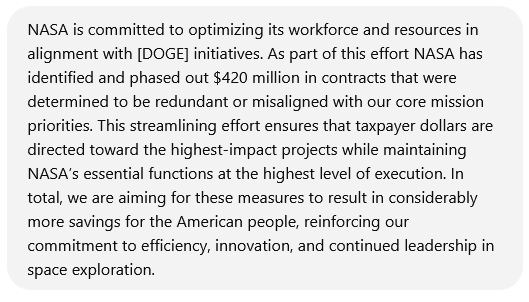
Il comunicato del DOGE.
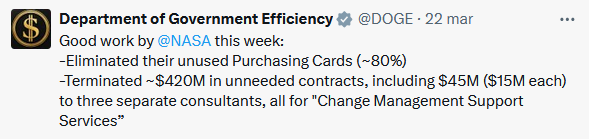
Per ora non ho trovato altri dettagli. Curioso il “420”.
Un articolo di CNN con qualche ulteriore dettaglio sui licenziamenti già effettuati.
 ‘Targeted’ and ‘cruel’: NASA staff react to layoffs as broader changes loom
Quest’anno dovrebbe esserci la senior review per le missioni planetarie, ma non l’ho trovata in programma.
Per quelle di astrofisica invece c’è:
Senza review, quest’anno termineranno senza estensione Parker Solar Probe, Juno, Mars Odyssey, Mars Reconnaissance Orbiter, MAVEN (NASA) e Mars Science Laboratory (il rover Curiosity). Le due due Voyager invece hanno soldi fino al 2026. PSP è di eliofisica, non è in estensione di missone e non ho trovato nessuna proposta di estensione.
4 Mi Piace
NASA
Jeff Foust di Space News ha cercato di capire - senza troppo successo - quali sono i contratti oggetto dei tagli.
Tra l’altro non si capisce nemmeno se i grant di cui si legge in giro sono i contratti a cui fa riferimento il comunicato di NASA e DOGE.
DOGE has stated it will maintain a list of savings from canceled contracts, grants and real estate leases, but has been slow to do so. The website is updated only weekly, with the last update March 19. In February, the DOGE website stated it would provide updates twice weekly.
The site currently lists 17 NASA contract terminations, whose total value is $44.5 million. However, the actual savings is significantly less: $26.1 million, with only four of the contracts offering any savings. The rest, with savings of $0 listed, suggest they are contracts whose total value has already been paid. […]
There is concern in the scientific community that many of the new savings being announced by NASA may come in the form of grant terminations. There are anecdotal accounts of research awards being revoked, but the reasons for doing so, and whether they are linked to this announcement, are unclear.
Meredith MacGregor, Assistant Professor at Johns Hopkins in the Department of Physics and Astronomy
Anche Stephen Clark (ed Eric Berger suo ghost writer) concorda che SLS non si taglierà per adesso (a mio avviso fino Artemis III di sicuro)
1 Mi Piace
NIST
Articolo di Wired sulla possibile chiusura dell’Atomic Spectroscopy Group. Viene spiegata l’importanza del lavoro che viene svolto e le possibili conseguenze della chiusura. Degno di nota il fatto che, a prescindere dalla chiusura degli uffici, il NIST ha già ridotto significativamente le proprie attività a causa dei limiti di spesa imposti dall’amministrazione.
Trump Admin Plans to Cut Team Responsible for Critical Atomic Measurement Data
One current NIST employee tells WIRED that a significant amount of scientific work has effectively stopped at the agency, due to spending limits imposed by the Trump administration that have made it difficult to get approval to purchase scientific equipment. It feels like “instead of just cancelling funding they’re choking off spending” and will try to end the year with money left over so officials “can take back and use it to justify rounds of budget cuts," says the staffer.
NASA
La neo Press Secretary della NASA, già Deputy Press Secretary del sen. Cruz, ha dichiarato a Fox News che senza l’intervento di Trump il ritorno degli astronauti non sarebbe avvenuto.
Video:
“First of all, we’re excited to have Butch, Suni and Nick all home after an extended stay in space. And you are absolutely right. This was a huge win for the Trump administration. And it would not have happened without President Trump’s intervention. Up next on the docket, to continue implementing President Trump’s ambitious space agenda that he touted in his inaugural address is to confirm his nominee for NASA administrator, Jared Isaacman.”
Riguardo ai $420M di tagli citati da DOGE e NASA, Casey Dreier, Chief of Space Policy presso The Planetary Society, sta provando a creare una lista dei contratti cancellati.
1 Mi Piace
Questa mi pare una cavolata bella e buona. O sbaglio?
4 Mi Piace
Si, come ampiamente illustrato é una vera e propria boutade.
4 Mi Piace
No no, è vero! Se non avessero eletto Trump li avremmo lasciati lassù fino alle elezioni successive 
15 Mi Piace
NASA
Riguardo alla “Reduction In Force”, NASA Watch ha pubblicato un memo inviato dal direttore del Marshall Space Flight Center ai dipendenti.
I know everyone has a lot of questions and concerns around the EO on workforce optimization. As I expected, all of the information I have seen and discussions I’ve been a part of are embargoed and I can’t share details beyond what’s in Janet’s email. […] To be clear as of this moment, we (Marshall leadership) have not been asked take any action in regards to RIF’s or workforce reductions.
Riguardo ai $420M di grant e contratti tagliati da NASA:
Casey Dreier di Planetary Society ha aggiornato il suo database
Science ha raccolto in un articolo le poche informazioni fino a ora disponibili:
 Confusion and worry as DOGE cuts hit NASA
Many other NASA-supported researchers are unsure whether their project has survived. A project director for a nearly 30-year-old NASA Earth observation program found out that her branch of the program might have been defunded only after Science told her it had identified the program in government data sets and asked for comment. “We’ve continued working because we had no idea that we were terminated,” says the project director, who asked to remain anonymous for fear of retaliation. “Now [employees] can’t invoice for work that they’ve done because I have no way of paying.” She has not been able to confirm the fate of her program.
Nell’articolo viene segnalato un altro taglio importante, extra-bilancio NASA.
The 21 March NASA cuts add to what may be the space agency’s largest grant termination so far: the funding for NASA’s Socioeconomic Data and Applications Center (SEDAC). That loss was part of the $400 million worth of funding cuts imposed on Columbia University, SEDAC’s host
Since the 1990s, SEDAC has made NASA satellite data usable for stakeholders. Perhaps its best known data set is the Gridded Population of the World, which takes point-based census data for where people live worldwide and adapts it to a global grid of 1-kilometer resolution, useful for assessing disaster impacts and other risks to human populations. Losing the 5-year, $30 million grant that funded SEDAC is “cutting at the knees some of the capabilities that NASA has painstakingly cultivated,” says Alexander De Sherbinin, a geographer at Columbia who leads SEDAC. “I’m just sorry it had to end like this.”
3 Mi Piace
NASA
Lungo articolo del Wall Street Journal sul futuro della NASA.
Elon Musk’s Mission to Take Over NASA—and Mars
Nulla di nuovo, salvo voci secondo le quali Musk avrebbe discusso la possibilità di rinunciare ai contratti “lunari” di SpaceX per concentrarsi su Marte.
Viene ricordato - qui si era già scritto a febbraio - che dentro NASA è già operativo un uomo di Musk (il cui ruolo più recente in SpaceX è stato leader of human spaceflight programs).
NASA staff on Jan. 31 received an email, reviewed by The Wall Street Journal, from the agency’s acting administrator to welcome a new senior adviser: longtime SpaceX executive Michael Altenhofen. In his role at SpaceX, he became close to Isaacman and talks to him frequently. He took up his position right away, ahead of the confirmation hearing for Isaacman.
Sulla possibilità di abbandonare Artemis.
Musk has discussed with officials the idea that SpaceX’s moon-focused contracts, valued at more than $4 billion, could be dropped in favor of Mars plans.
Current and former NASA officials have said they are worried that a major overhaul of Artemis would end up stalling U.S. progress after years of effort on hardware and infrastructure for the program. Getting rid of the SLS rocket carries its own risks, those officials say, because new private-sector vehicles, including SpaceX’s Starship, aren’t operational or are still ramping up.
Officials from Trump’s Office of Management and Budget have told people about discussions under way to move U.S. government dollars toward Mars initiatives and away from programs focused on the moon and science missions. Killing or dramatically remaking the program would unravel years of development work, but some proponents say much of the hardware for Artemis, from the SLS rocket to ground infrastructure, is too expensive, slow to produce and behind schedule.
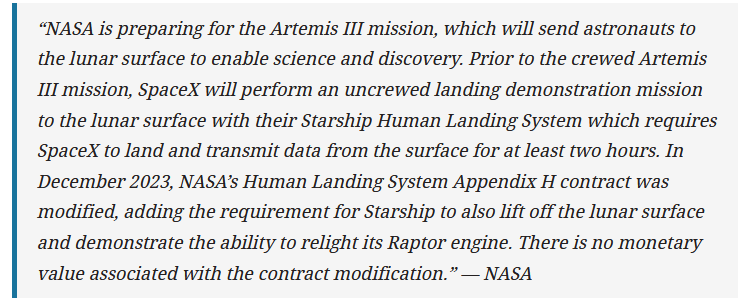
Sempre riguardo ad Artemis, Space Policy Online, prendendo spunto da un intervento di Lori Glaze, NASA’s Acting Associate Administrator for Exploration Systems Development, ha fatto il punto della situazione, scoprendo tra l’altro che i requisiti del contratto relativo a HLS sono stati cambiati e che ora il lander dovrà dimostrare anche la capacità di decollare dalla superficie lunare:
Artemis II on Track, But NASA Awaits Starship Milestones for Artemis III
Before Artemis III’s launch, SpaceX must demonstrate Starship HLS can land on the Moon — and lift off. The original contract didn’t require liftoff, only landing, but Glaze told the AAS audience SpaceX must “demonstrate a successful uncrewed landing and launch from the surface of the Moon.”
SpacePolicyOnline later inquired when the contract changed, what the liftoff requirement is, and whether the contract value increased. A NASA spokesperson responded:
Air Force
Da Breaking Defense: nell’ambito del programma Transport Layer - una costellazione di satelliti in LEO per le comunicazioni militari - si starebbe valutando la possibilità di abbandonare le future gare in favore di una assegnazione diretta a SpaceX.
The Department of the Air Force is considering a plan in which the Space Development Agency (SDA) would cancel upcoming competitions for its future Transport Layer satellites in favor of tapping SpaceX to provide the capability to rapidly transmit large amounts of data around the globe, two sources told Breaking Defense.
The agency also has issued contracts for 200 Tranche 2 Transport Layer birds to four contractors, Lockheed Martin, Northrop Grumman, York Space Systems and Rocket Lab. […]
It is unclear whether the Air Force proposal involves canceling the contracts for Tranche 2, or only affects the next-generation Tranche 3 birds that have yet to be be contracted out. Canceling current contracts is a much bigger challenge, and also would incur termination costs.
3 Mi Piace
Rimango allibito. Un test solo di atterraggio sulla luna e non di ripartenza? i futuri passeggeri dovrebbero fidarsi a scatola chiusa?
2 Mi Piace
Era stato già chiarito tre anni fa.
2 Mi Piace
La nomina di Isaacman verrà discussa in Senato il 9 aprile.
2 Mi Piace
Qualcuno ha informazioni su dazi e impatto sui programmi spaziali?
L’impatto c’è sicuramente, tantissimi componenti e materiali sono di produzione americana.
Componenti e materiali chimici, elettronici, metalli… su cui le aziende spaziali europee dovranno pagare i dazi (europei) per l’importazione.
Alla stessa maniera la spedizione negli USA dei moduli o dei satelliti finiti o semifiniti per integrazione finale o lancio, dovranno pagare alla dogana (americana).
Quindi molta roba vedrà il dazio sia all’andata che al ritorno… facendo crescere notevolmente i costi di produzione ma soprattutto di vendita.
Questo vale anche per i programmi in corso e i contratti già firmati…
Meno male che HALO è partito la settimana scorsa… Tutti gli altri moduli del gateway, Cugnus, ORION ESM, tutto quello che volerà con lanciatori USA, dovrà pagare 
2 Mi Piace
Se ti riferisci al cartellone esibito ieri da Trump è solo propaganda, quei numeri non sono veri. Ho visto i conti, quelle percentuali non sono i dazi imposti, ma il deficit del commercio in proporzione ai volumi.
Quello che vuole evidenziare Trump è che dalla fine della Bretton Woods, l’America ha una bilancia commerciale incredibilmente pendente verso le importazioni e che vuole risolvere questo problema. Ha parlato di tariffe doganali ma ha mostrato altri numeri.
L’impatto nel mondo spaziale ancora non è diretto, ma le agenzie si muovono in preparazione di quello che avverrà, tendenzialmente diminuendo l’avversione al rischio.
Le tariffe riguarderanno, presumibilmente, i prodotti che sanno fare a casa. Alcuni dei prodotti menzionati sopra da @furdisufit potranno essere esenti da dazi quando verranno inviati negli States, è solo la mia opinione, non voglio contraddirti senza mostrare evidenze.
In caso di vendetta dell’Europa, quando verranno importanti componenti per la costruzione dei satelliti, pagheremo dazi.
5 Mi Piace
Mi ha colpito quello che ha detto uno degli esperti di Limes (la rivista di geopolitica): la strategia dei dazi di Tumps sarebbe a breve termine. Come li ha messi velocemente li toglierebbe (o diminuirebbe) altrettanto velocemente quando avrà ottenuto qualcosa che gli interessa. Solitamente non si attua questa tecnica perché così si destabilizzano i mercati che invece avrebbero bisogno di fiducia e continuità.
Lo stesso di Limes diceva però che altri ai vertici USA vedrebbero i dazi come strategia a lungo termine, finalizzati a rilanciare la produzione industriale americana (in lunghi anni).
Credo sia molto difficile prevedere qualcosa di preciso.