Pannelli solari completamente dispiegati.
https://x.com/NASAJPL/status/1845914379298263539
Ora la sonda è così (senza Giove dietro)

 : NASA
Pannelli solari completamente dispiegati.
https://x.com/NASAJPL/status/1845914379298263539
Ora la sonda è così (senza Giove dietro)
: NASA
Ogni volta che lanciano queste missioni mi viene da pensare a quelli che se ne occupano, che devono aspettare 6 anni per arrivare.
Ci sarà qualcuno che andrà in pensione prima di arrivare 
Il lancio è solo una delle fasi intermedie. C’è gente che ci lavora da prima del 2010. Sono più di 20 anni di attesa per qualcuno.
Eh sì, ma di solito il lancio è il culmine… E invece poi altri 6 anni di si attesa 
Trovato un sito molto carino curato da Raphael Marschall (CNRS) per seguire la posizione di Europa Clipper.
O.T. Su siti simili si possono seguire anche Lucy, Juice ed Hera.
Prosegue tutto bene
Flyby di Marte
Flyby senza nessun strumento attivo e senza nessuna camera di servizio o di navigazione. Buttiamo sempre fango sull’industria Europea e sulla comunicazione ESA ma a volte non abbiamo molto da invidiare.
Sull’industria Europea niente da dire, ma sulla comunicazione ESA non posso che continuare a essere scontento (e ne parlo anche con i colleghi di Communications).
Quel post di ESA ha avuto 100 likes in 5 ore. Raggiungiamo 100 persone delle 400 milioni degli stati membri 
Si abbiamo sicuramente da migliorare. Ma mi riferivo alla copertura mediatica che c’è stata per i vari Flyby di JUICE soprattutto per le varie immagini delle camere di navigazione/ispezione. Sia per Bepi che per JUICE sono sempre state rilasciate. Comunque JUICE ha anche preso l’occasione di LEGA per usare e calibrare i payload ( ed alcuni sono in comune o molto simili).
Ovviamente io sono di parte  ma si dipinge sempre l’industria europea come all’età della pietra invece nelle missioni robotiche ( senza lander ) non siamo messi così male.
E come lander non siamo messi maluccio (Huygens e Philae).
Durante il flyby, Europa Clipper ha testato su Marte il radar che dovrebbe vedere sotto i ghiacci di Europa.
As Europa Clipper zipped by the volcanic plains of the Red Planet — starting at 3,100 miles (5,000 kilometers) down to 550 miles (884 kilometers) above the surface — REASON (Radar for Europa Assessment and Sounding: Ocean to Near-surface) sent and received radio waves for about 40 minutes. In comparison, at Europa the instrument will operate as close as 16 miles (25 kilometers) from the moon’s surface.
All told, engineers were able to collect 60 gigabytes of rich data from the instrument. Almost immediately, they could tell REASON was working well. The flight team scheduled the full dataset to download, starting in mid-May. Scientists relished the opportunity over the next couple of months to examine the information in detail and compare notes.
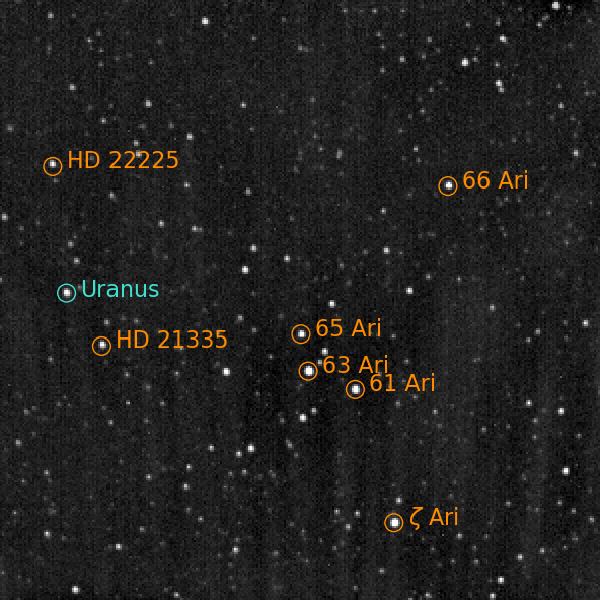
Cos’è quel puntino che si muove pochissimo sula parte sinistra? Risposta nascosta nello spoilerino.
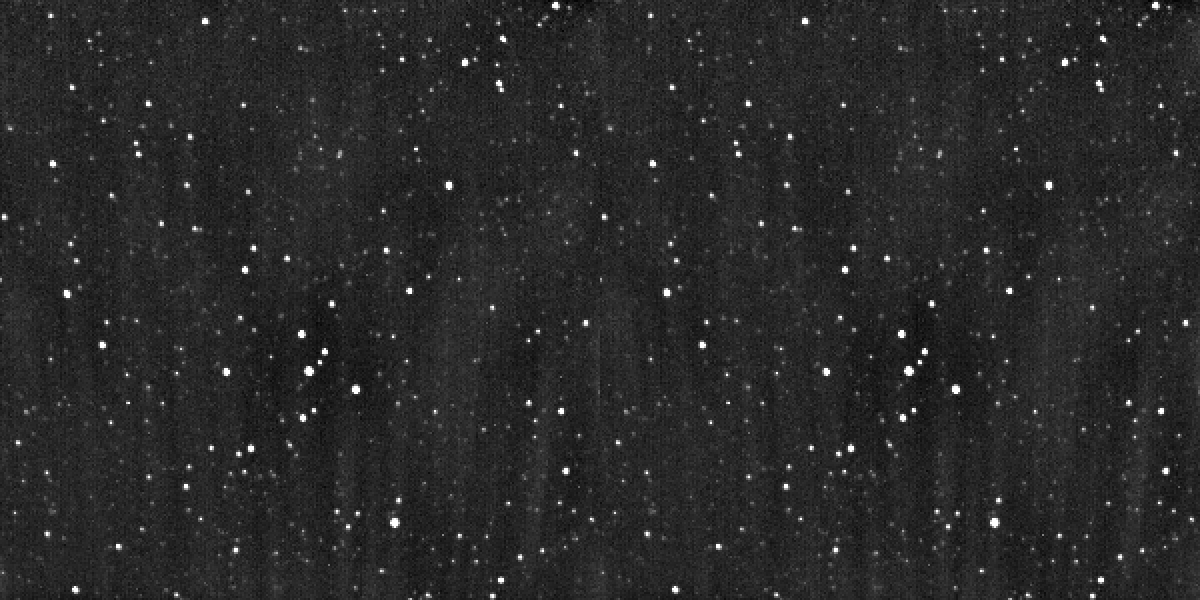
Urano, catturato con le camere degli star tracker.
https://science.nasa.gov/photojournal/europa-clipper-captures-uranus-with-star-tracker-camera/
A gennaio 2026 dovrebbe esserci la fionda gravitazionale con la Terra
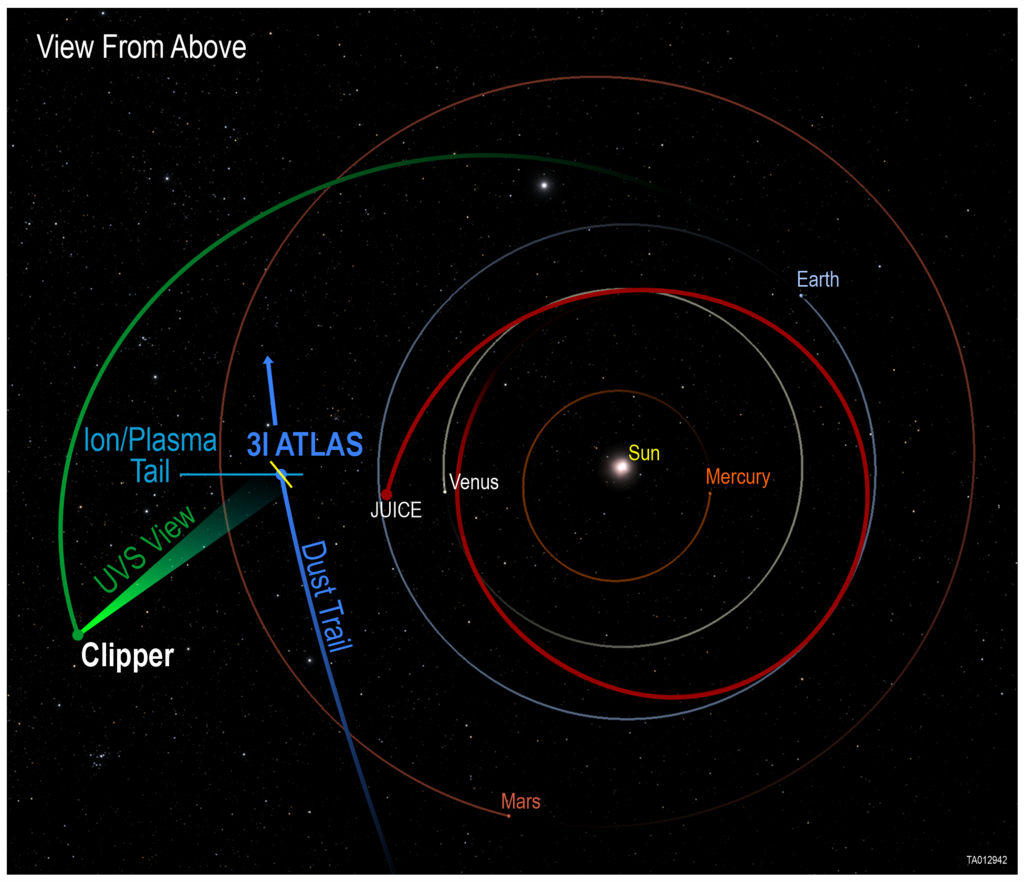
Anche Europa Clipper ha osservato 3I/ATLAS.
With the comet’s trajectory passing between Europa Clipper and the Sun, its vantage point enabled the UVS team to view the comet from a unique perspective. Comets have both dust tails in the trailing direction and plasma tails in the direction away from the Sun.
Europa-UVS’s unusual sunward viewpoint obtained a unique downstream view of the comet’s two tails, viewing largely from “behind” the tails and looking back towards the comet nucleus and coma (cloud of gas surrounding it). Additional data from the SwRI-led UVS instrument aboard ESA’s Jupiter Icy Moons Explorer (JUICE) will complement these insights, providing a more common anti-sunward view at the exact same time.
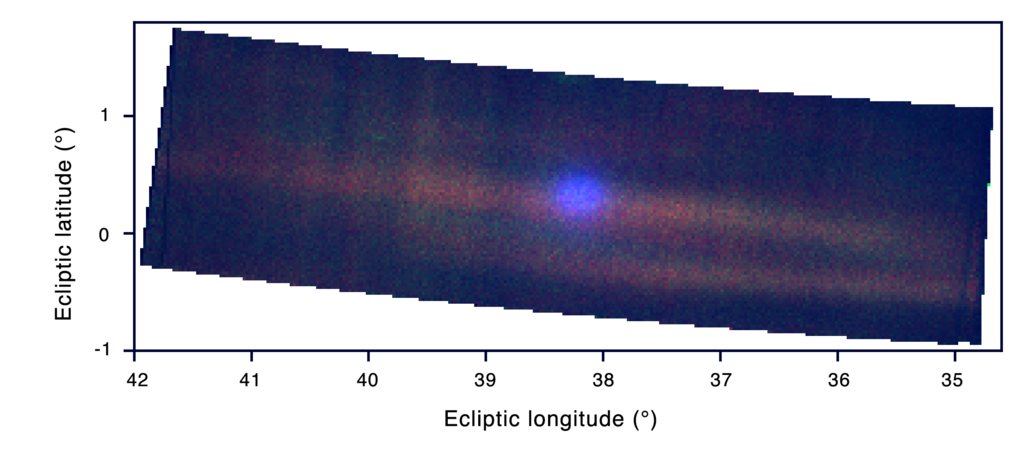
The Southwest Research Institute-led Ultraviolet Spectrograph (UVS) aboard NASA’s Europa Clipper spacecraft made valuable observations of the interstellar comet 3I/ATLAS during a period when it was difficult to observe from Mars- and Earth-based vantage points, viewing its two tails from between their downstream directions.
Interstellar comet 3I/ATLAS is seen in this composite image captured on Nov. 6, 2025 by the Europa Ultraviolet Spectrograph instrument on NASA’s Europa Clipper spacecraft instrument, from a distance of around 103 million miles (164 million kilometers).
Anche se non strettamente legato all’attività della sonda, segnalo una intervista di Fraser Cain - Universe Today al prof. Paul Bryne sulla tettonica di Europa e su come la probabile assenza di fenomeni significativi indebolisca la possibilità che il suo oceano sotterraneo sia un ambiente in grado di sostenere la vita.
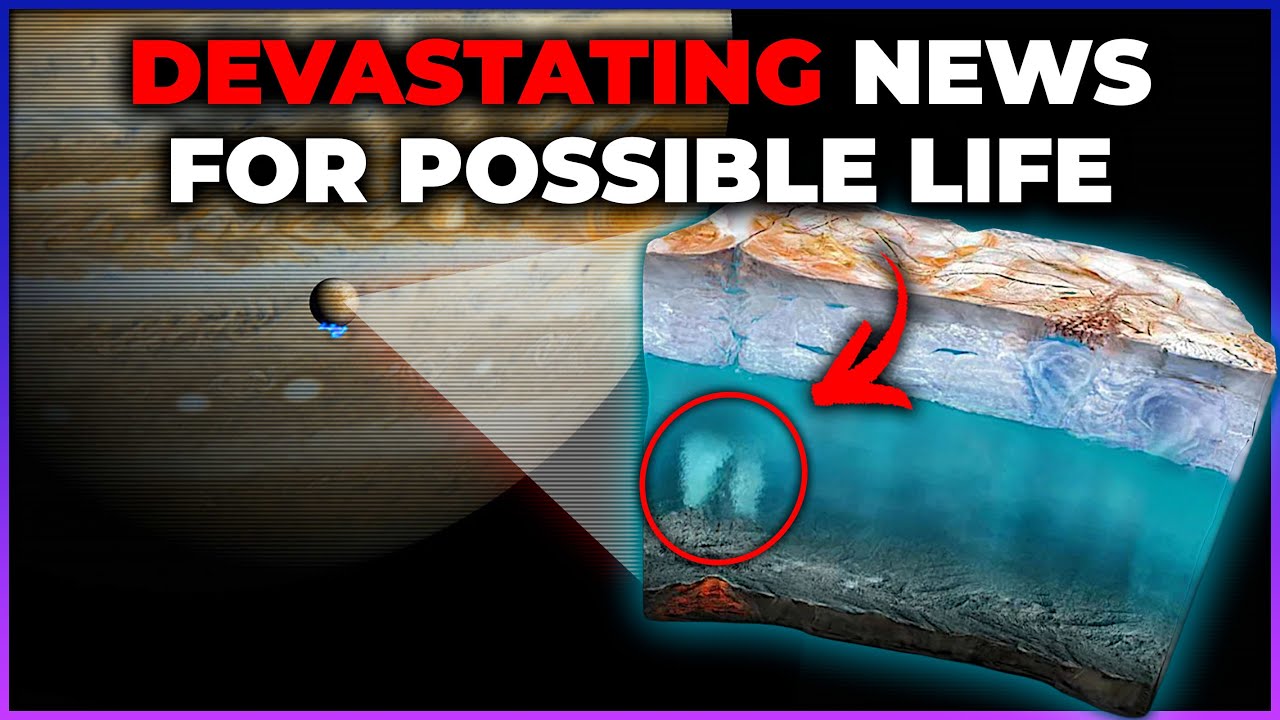
Europa is considered one of the most promising places in the solar system to look for extraterrestrial life. But new studies suggest that we were wrong. That the sub-surface ocean is most probably uninhabitable and lifeless. Why is it so and what does it mean for future missions and search for life? Finding out in this interview.
L’articolo su Universe Today.
“If we could explore that ocean with a remote-control submarine, we predict we wouldn’t see any new fractures, active volcanoes, or plumes of hot water on the seafloor,” lead author said Byrne said in a press release. “Geologically, there’s not a lot happening down there. Everything would be quiet.” And on an icy world like Europa, a quiet seafloor might well mean a lifeless ocean, he added.
Il paper su Nature.
Little to no active faulting likely at Europa’s seafloor today
[…] Here, we characterise the stress state of the seafloor of Jupiter’s moon Europa, and thus the prospect for fracturing and associated sub-seafloor fluid flow there. We consider stresses from tidal forcing, global contraction, mantle convection, and serpentinisation. We find that none of these mechanisms is likely able to drive slip along even weak, pre-existing fractures in the present. Ocean water–rock reactions taking place today are therefore probably restricted to fluid flow through only the upper few hundred metres of the seafloor. Any processes able to sustain habitable conditions at the Europan seafloor today must therefore be independent of ongoing tectonic activity.
Per seguire il prof. Byrne:
No, a dicembre 2026.
December 2026: Earth Flyby
Europa Clipper comes home (briefly) for its second gravity assist, swinging about 2,000 miles (3,200 kilometers) from Earth. This flyby, along with the earlier Mars flyby, gives the spacecraft enough energy to reach Jupiter.
L’altra volta non so dove l’ho letto (o ho creduto di leggerlo). Stavolta metto la fonte:
https://science.nasa.gov/mission/europa-clipper/mission-timeline/
Non ricordo se su FA qualcuno aveva riportato la notizia dei pennacchi di vapore acqueo individuati su Europa grazie alle osservazioni di Hubble ma l’autore del paper originale ha pubblicato un nuovo studio in cui smentisce i risultati del primo articolo; si tratterebbe di falsi positivi causati da errori di allineamento delle immagini.
L’articolo da Universe Today.
The original detection of the plumes was based on hydrogen Lyman-α and oxygen OI emissions detected by the Hubble. Since hydrogen and oxygen make water, the detection and analysis suggested that the plumes were water vapour. “They are consistent with two 200-km-high plumes of water vapor…” the authors wrote in 2014.
But now the researchers are retracting those observations. As it turns out, the positioning and context of Europa in the Hubble images created the initial detection. “One of the difficulties in interpreting the data back then was determining where to place Europa within its context,” said SwRI’s Dr. Kurt Retherford. Retherford is a co-author of the 2014 paper and the new paper. “The way Hubble works left some uncertainty in terms of placement relative to the center of the image. If Europa’s placement was off even just by a pixel or two, it could affect how the data gets interpreted.”
So instead of Lyman-α and oxygen OI emissions, we have what could be only statistical noise.
Il paper: