Inizia la “quinta” campagna scientifica di Perseverance.
https://www.jpl.nasa.gov/news/nasas-perseverance-rover-to-begin-long-climb-up-martian-crater-rim
Metto le virgolette solo perché non ho trovato traccia di una denominazione formale delle campagne precedenti.
3 Mi Piace
Più in alto di quanto lo sia mai stato in precedenza (tranne quando stava atterrando: lì i 300 metri di altezza li ha abbondantemente superati)
6 Mi Piace
Perseverance è arrivato in cima al Jezero crater.
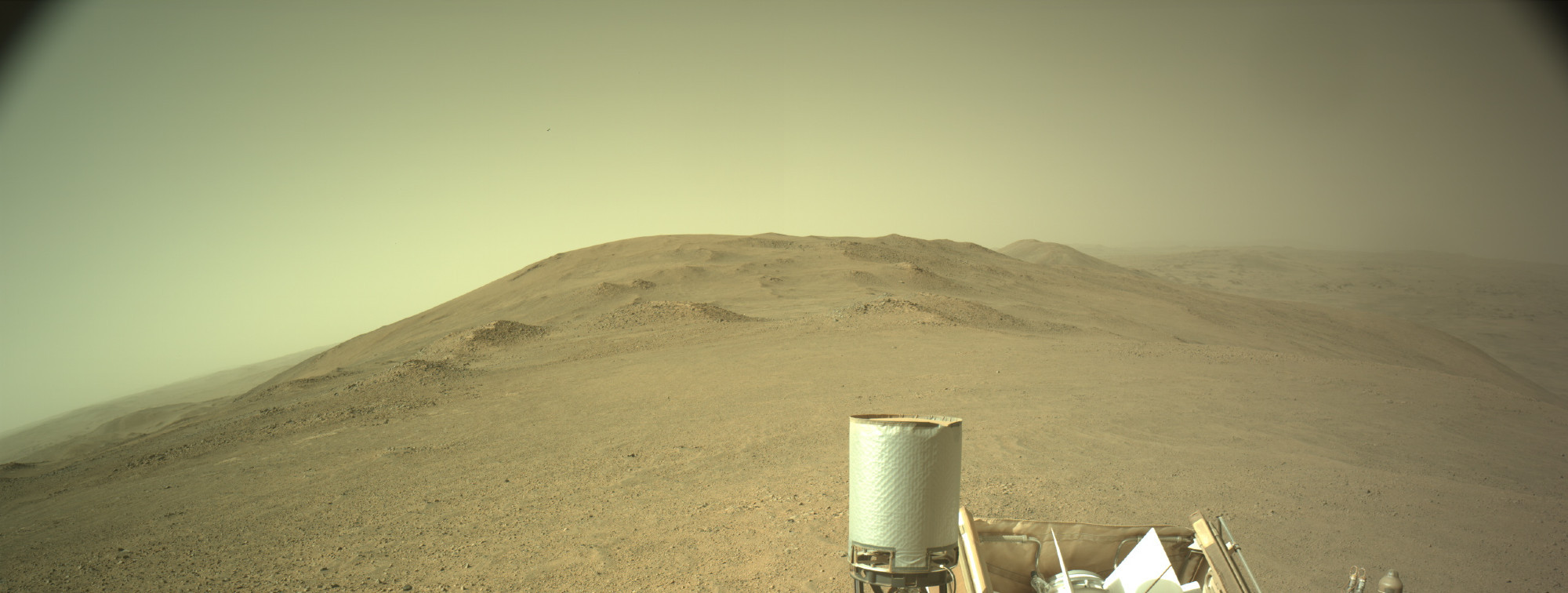
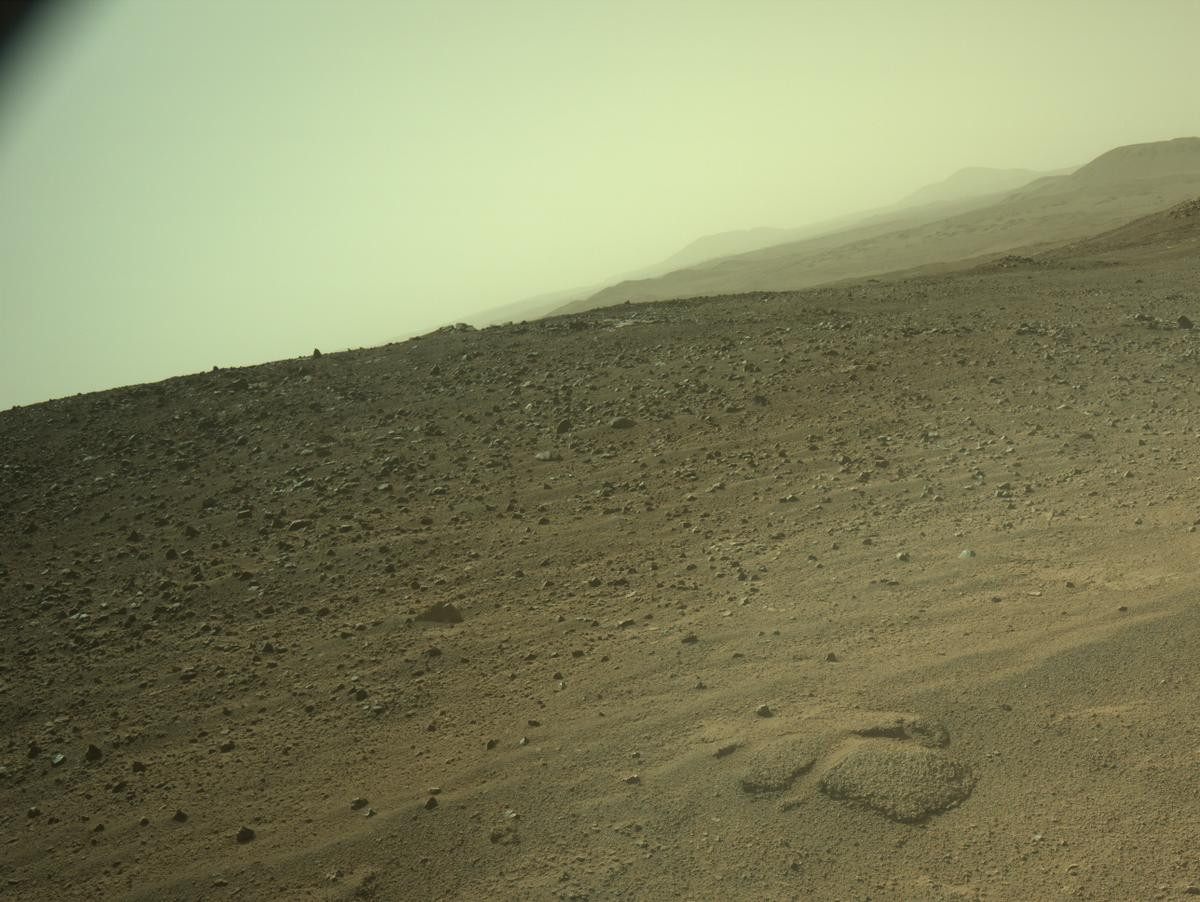
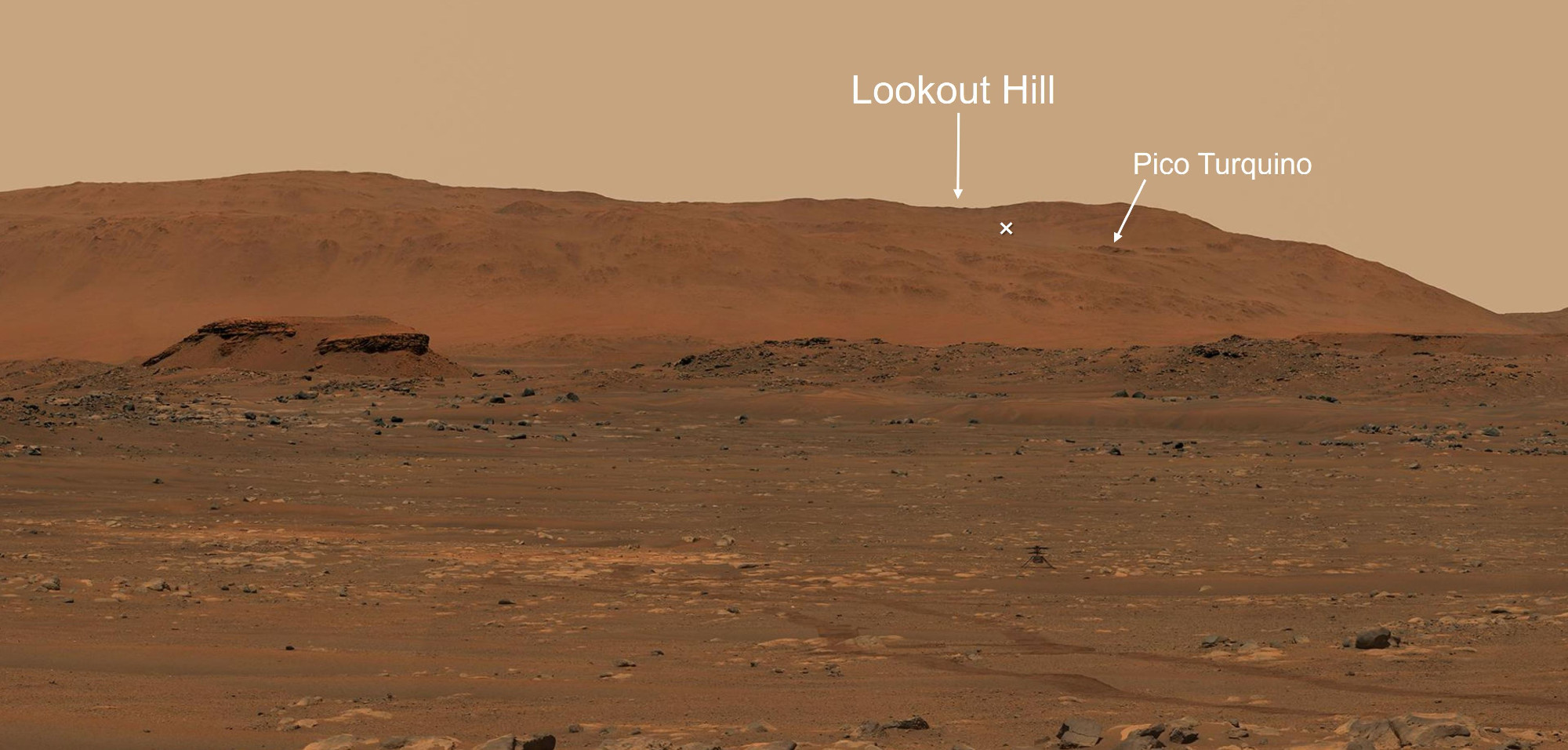
Quella indicata dalla freccia corrispondente a Lookout Hill dovrebbe essere la posizione attuale.
Edit 13/12
Panorama a 360°.
https://www.360cities.net/image/marsrover-perseverance-navcam-sol-1354
6 Mi Piace
È stata pubblicata una anticipazione del rapporto sulle cause dell’incidente che ha portato alla perdita di Ingenuity. Il rapporto completo uscirà nelle prossime settimane.
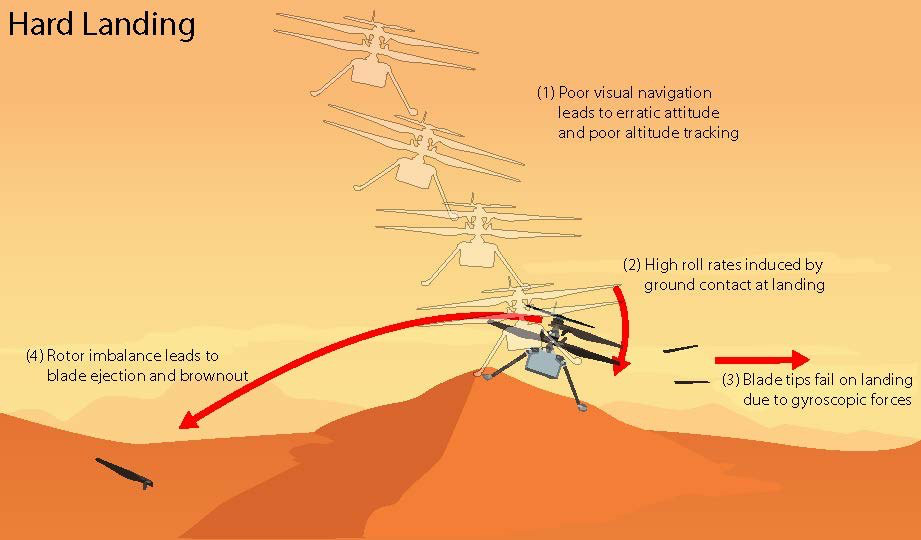
The investigation concludes that the inability of Ingenuity’s navigation system to provide accurate data during the flight likely caused a chain of events that ended the mission.
Data sent down during Flight 72 shows that, around 20 seconds after takeoff, the navigation system couldn’t find enough surface features to track.
Photographs taken after the flight indicate the navigation errors created high horizontal velocities at touchdown. In the most likely scenario, the hard impact on the sand ripple’s slope caused Ingenuity to pitch and roll. The rapid attitude change resulted in loads on the fast-rotating rotor blades beyond their design limits, snapping all four of them off at their weakest point — about a third of the way from the tip. The damaged blades caused excessive vibration in the rotor system, ripping the remainder of one blade from its root and generating an excessive power demand that resulted in loss of communications.
https://www.jpl.nasa.gov/news/nasa-performs-first-aircraft-accident-investigation-on-another-world/
Edit. 12/12
Thread con alcuni dettagli:
Will Pomerantz è Head of Space at AeroVironment
Conferenza stampa. Tuttli gli oratori sono NASA / JPL

6 Mi Piace
Un bellissimo grafico con l’andamento dell’altezza relativa del cratere Jezero e i campionamenti effettuati da Percy: i punti colorati sono momenti in cui è stato usato il laser della SuperCam per raccogliere dati, mentre a colori diversi corrispondono regioni diverse. I diamanti rappresentano i luoghi in cui lo strumento di abrasione di Percy è stato usato per studiare le rocce. Le linee tratteggiate sono i livelli presunti dei vecchi laghi.
Sull’asse delle ascisse ci sono i giorni marziani e sulle ordinate l’altezza (Jezero è un cratere 2.6 km sotto al livello di riferimento di Marte).

 : NASA/JPL-Caltech/LANL/CNES/IRAP/DLR
8 Mi Piace
Intanto, su Marte, ieri Perseverance ha fotografato 3 dust devils in un colpo solo!
Il video è stato creato con 21 fotografie e copre un arco temporale di 2 minuti, quindi è accelerato di circa 60 volte.
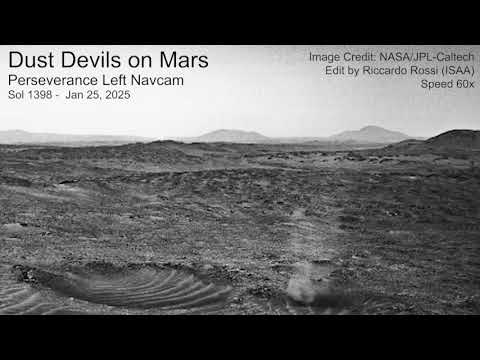
6 Mi Piace
Nuovo video dal nostro @Rikyunreal.
Three dust devils on Mars spotted by NASA’s Perseverance Mars Rover
2 Mi Piace
Percy ha scovato un tesoro, un pezzetto di 3cm di crosta marziana antichissima risalente a 4 miliardi di anni fa!
3 Mi Piace
Altra roccia interessante trovata nel Jazero crater.
 Could Mars have had a tropical climate in the past?
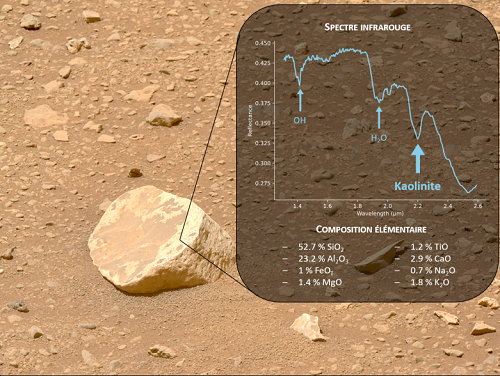
An international research team comprising scientists from CNRS Terre & Universe and CNRS Physique (including LATMOS-IPSL) has identified clear rocks rich in alumina, a compound rarely found in such high concentrations on Mars. These rocks contain minerals such as kaolinite, a clay formed by intense aqueous alteration, and dehydrated phases, including spinel-type minerals. […]
Their discovery is significant because kaolinite and other similar clays are markers of a once habitable environment. It demonstrates that Mars underwent complex geological processes comparable to those observed on Earth, and confirms that water played a crucial role in transforming its landscape.
Paper:
 Intense alteration on early Mars revealed by high-aluminum rocks at Jezero crater
Hypotheses for the origin, alteration, and eventual emplacement of aluminum (Al) rich material in Jezero crater, Mars.
A. Intense aqueous alteration of a volcanic and/or volcaniclastic protolith (e.g., surface leaching or subsurface hydrothermal alteration) generates Al-rich clay minerals (kaolin group clays). […]
B. Subsequent volcanic and/or impact processes altered deep weathering profile material into metamorphosed Al-rich material including dehydrated/dehydroxylated kaolinite and spinel;
C. Subsequent transport of altered material into Jezero may have resulted from either fluvial incision and transport into Jezero or ballistic transport as impact ejecta.
Credit: Royer, C., Bedford, C.C., Johnson, J.R. et al.

1 Mi Piace
Aggiornamento su “Cheyava Falls”, la roccia di cui si era parlato qui.
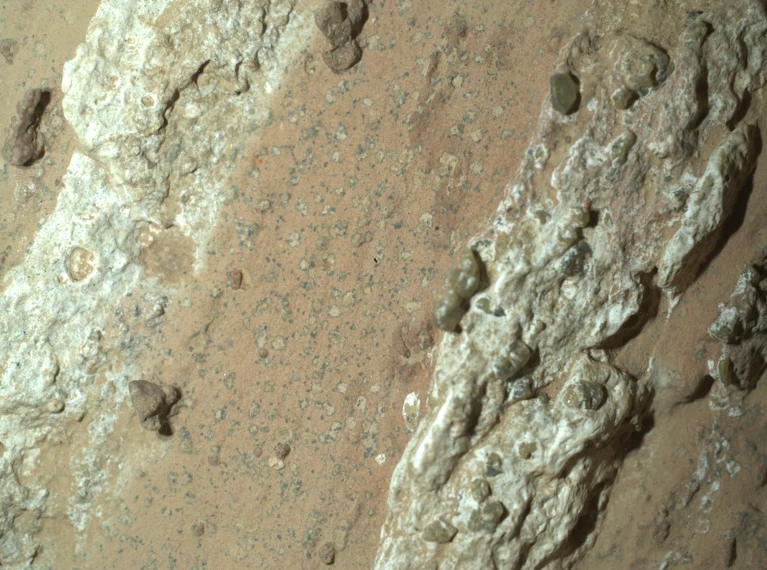
Se ne è tornati a discutere al Lunar and Planetary Science Conference - LPSC 2025 e per ora l’ipotesi che potrebbe aver ospitato vita microbica non è stata esclusa, anzi: “sebbene sia necessario esplorare altri possibili meccanismi non biologici, questa analisi suggerisce che i processi metabolici di origine biologica rappresentano l’ipotesi attualmente più probabile per la formazione di queste caratteristiche uniche”.
L’articolo di Nature:
Did Mars harbour life? One of the strongest signs yet is spotted in a peculiar rock
The rock contains dark peppery spots, which rover scientists nicknamed ‘poppy seeds’, and larger dark-rimmed blobs with lighter centres, dubbed ‘leopard spots’. Chemical analysis using the rovers’ instruments showed that the poppy seeds and the rims of the leopard spots are rich in iron and phosphorous. The centres of the leopard spots are rich in iron and sulphur, Joel Hurowitz, a geochemist at Stony Brook University in New York, told the conference.
These chemical enrichments suggest that the poppy seeds and leopard spots formed when carbon-containing ‘organic’ compounds in the rock reacted with iron and sulfate minerals. On Earth, such reactions are kicked off by microbes.
Although these reactions could have taken place without life if the rock were heated significantly, Hurowitz and his colleagues do not think that is probably what happened; the rock is fine-grained, which suggests that it has not been heated and recrystallized. If the rock’s temperature did remain low, modelling studies suggest that the spots could easily have formed if living things played a part in the process, Michael Tice, a geobiologist at Texas A&M University in College Station, said at the conference.
Il paper:
4 Mi Piace
Le ultime “rocce strane” viste da Perseverance.

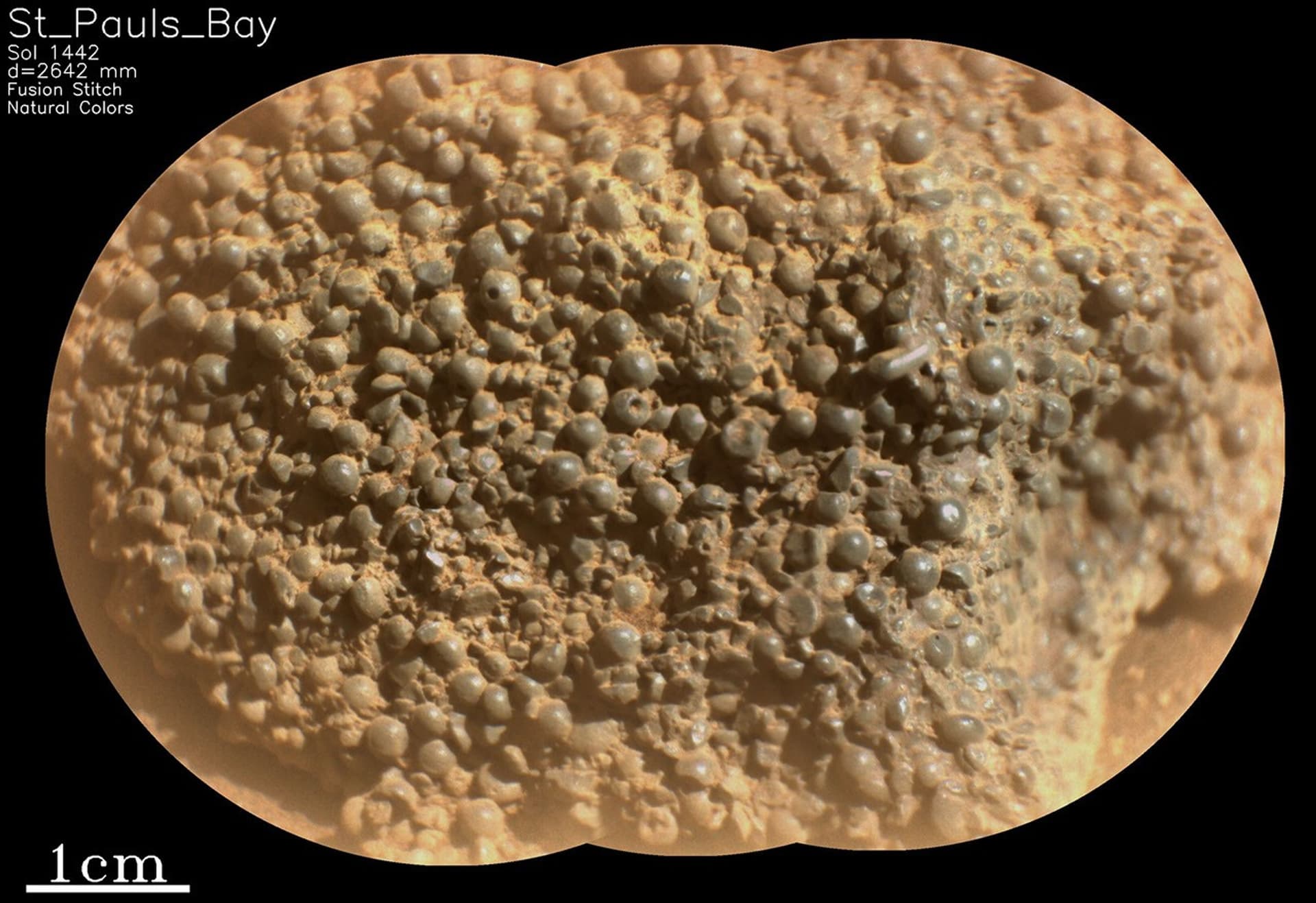
This image from NASA’s Mars Perseverance rover, a fusion-processed SuperCam Remote Micro Imager (RMI) mosaic, shows part of the “St. Pauls Bay” target, acquired from the lower Witch Hazel Hill area of the Jezero crater rim. The image reveals hundreds of strange, spherical-shaped objects comprising the rock. Perseverance acquired this image on March 11, 2025, or sol 1442 — Martian day 1,442 of the Mars 2020 mission. NASA/JPL-Caltech/LANL/CNES/IRAP.
L’articolo di NASA:
The rock, named “St. Pauls Bay” by the team, appeared to be comprised of hundreds of millimeter-sized, dark gray spheres. Some of these occurred as more elongate, elliptical shapes, while others possessed angular edges, perhaps representing broken spherule fragments. Some spheres even possessed tiny pinholes! What quirk of geology could produce these strange shapes?
Altra roccia “originale” vista in questi giorni.
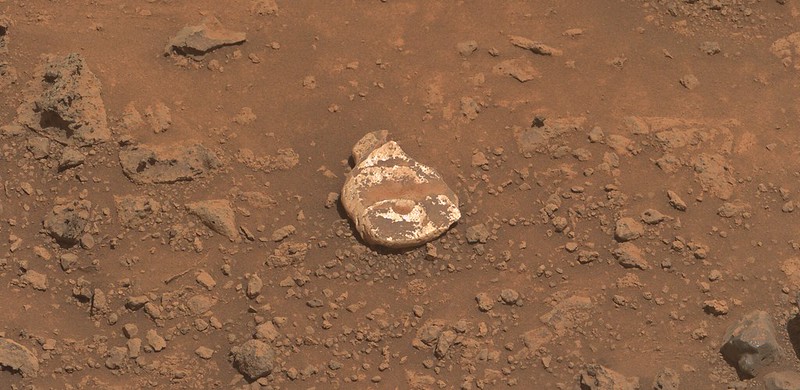
NASA/JPL-Caltech/ASU/Kevin M. Gill
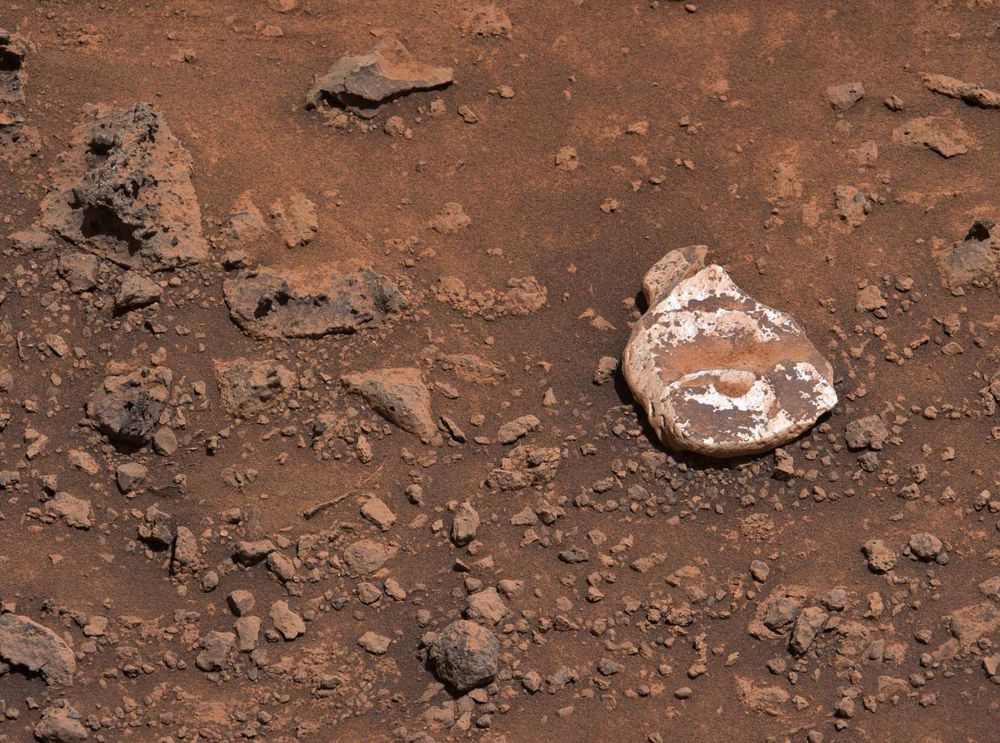
NASA Perseverance Rover at Jezero Crater, Mars Sol-01453 (22nd March, 2025) Mastcam-Z-Left. Set: 09512. Site 71 Drive 0. Credits: NASA/JPL-Caltech/ASU/MSSS/Martian-Observer
2 Mi Piace
Ma nella prima foto non vi sembrano gli stessi “mirtilli” già visti più volte anche dagli altri rover in passato?
2 Mi Piace
Sì, sono simili ma potrebbero avere origini differenti. Lo spiega nell’articolo.
This isn’t the first time strange spheres have been spotted on Mars. In 2004, the Mars Exploration Rover Opportunity spotted so-called, “Martian Blueberries” at Meridiani Planum, and since then, the Curiosity rover has observed spherules in the rocks of Yellowknife Bay at Gale crater. […]
In each of these cases, the spherules were interpreted as concretions, features that formed by interaction with groundwater circulating through pore spaces in the rock. Not all spherules form this way, however. They also form on Earth by rapid cooling of molten rock droplets formed in a volcanic eruption, for instance, or by the condensation of rock vaporized by a meteorite impact. Each of these formation mechanisms would have vastly different implications for the evolution of these rocks, so the team is working hard to determine their context and origin.
St. Pauls Bay, however, was float rock — a term used by geologists to describe something that is not in-place. The team are now working to link the spherule-rich texture observed at St. Pauls Bay to the wider stratigraphy at Witch Hazel Hill, and initial observations have provided tantalizing indications that it could be linked to one of the dark-toned layers identified by the team from orbit. Placing these features in geologic context will be critical for understanding their origin, and determining their significance for the geological history of the Jezero crater rim and beyond!
2 Mi Piace
Segnalo un bel video di Veritasium che parla di Ingenuity:

6 Mi Piace
video fantastico, davvero emozionante!
1 Mi Piace
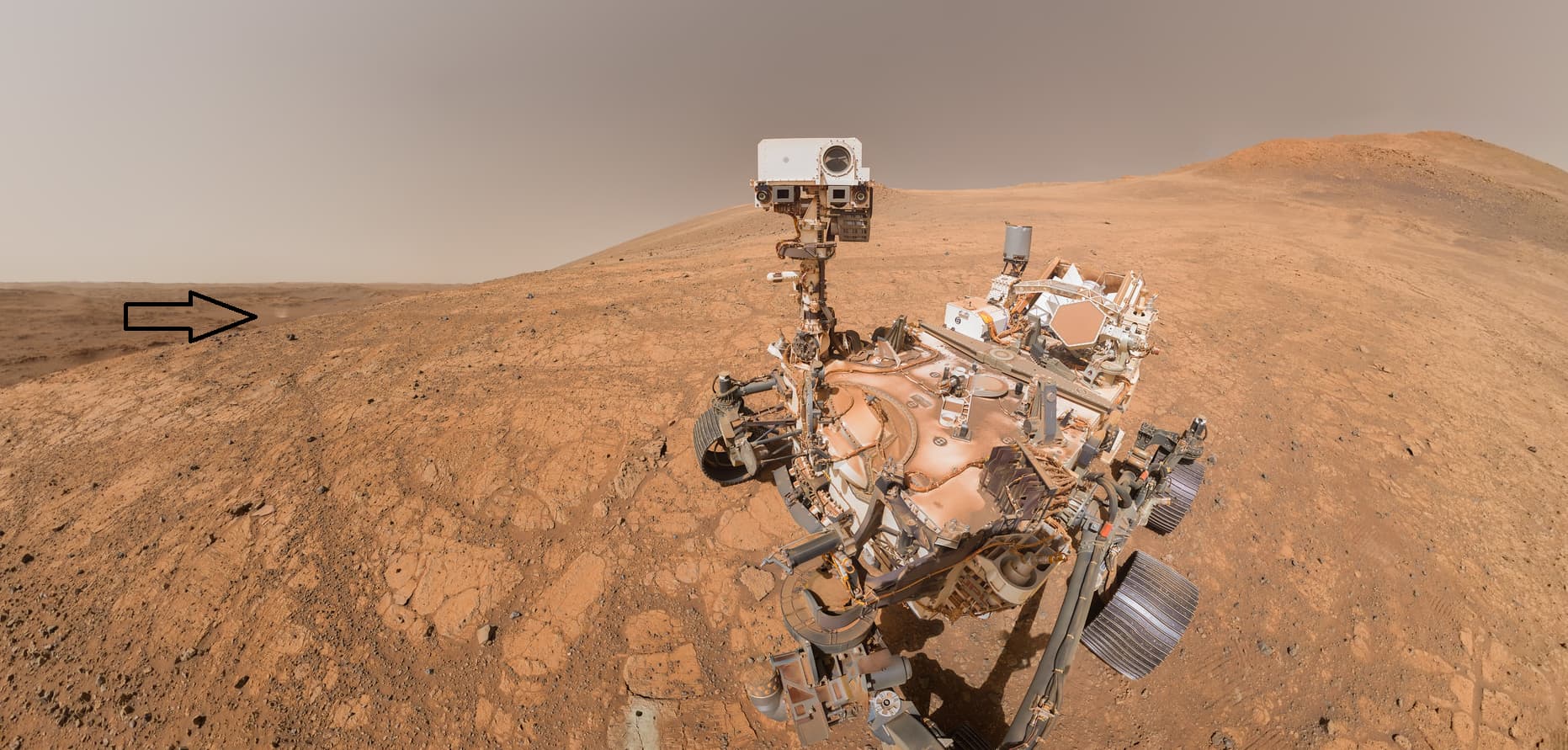
Nuovo selfie di Perseverance.
Qui su flickr. Notare che è riuscito a catturare anche un dust devil.
[
](


)
Qui rielaborato in un panorama a 360 gradi. “I stitched this selfie from 59 images captured by the robotic arm mounted WATSON camera. They were combined with four Navcam Left images from Sol 1478 to fill in the 360 view, though some gaps remain on the ground. The sky was filled in using a simulated Mars sky image by Steve Albers.”
https://www.360cities.net/image/perseverance-watson-selfie-near-sally-s-cove-sol-1500/vr
3 Mi Piace
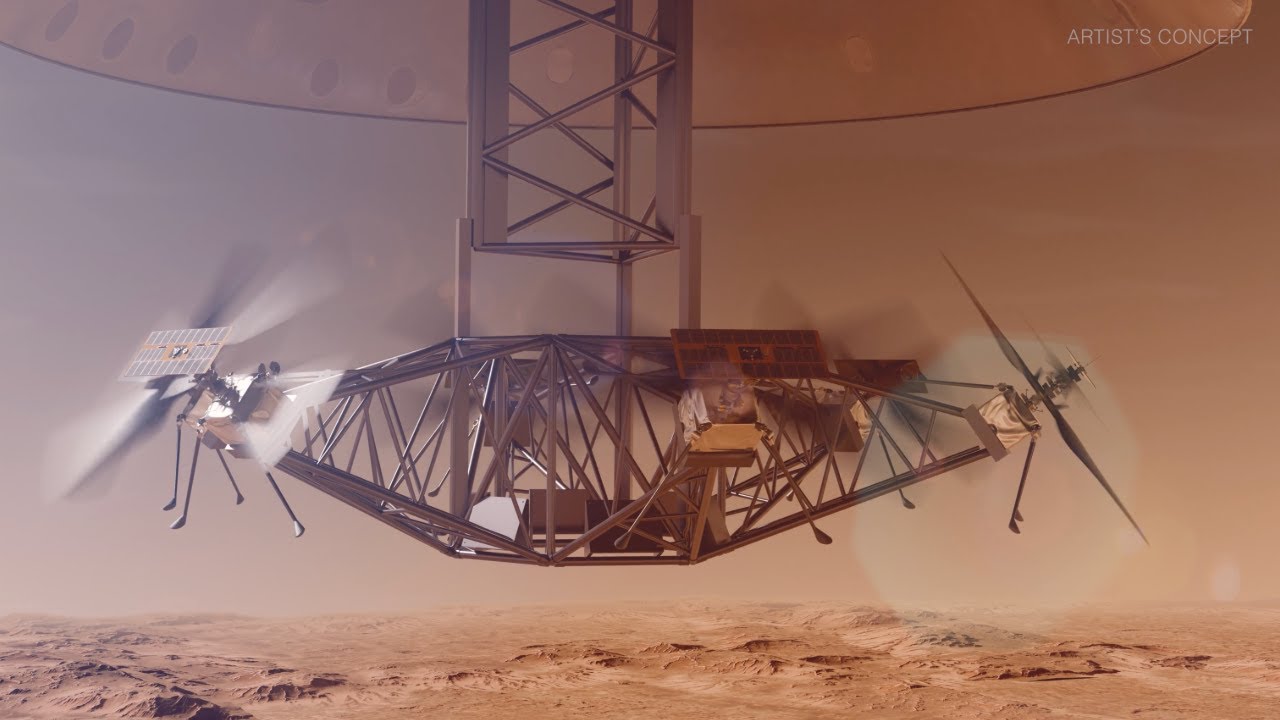
Ingenuity avrà degli eredi: 6 elicotteri potrebbero volare su Marte. È il concept di una potenziale missione progettata da AV Space con il Jet Propulsion Laboratory (JPL). Una volta in superficie studieranno il suolo e l’area delle regioni scelte da NASA per l’atterraggio del primo essere umano su Marte.
5 Mi Piace
E come comunicheranno con la Terra?
a basso bit rate non è difficile comunicare con un satellite in orbita bassa marziana che faccia da ripetitore
1 Mi Piace
2025-09-10T15:00:00Z ci sarà una teleconferenza NASA per discutere delle analisi effettuate da Perseverance su un campione raccolto a luglio 2024, chiamato Sapphire Canyon, in una zona in cui scorreva acqua.
Ci saranno:
- Amministratore ad interim Sean Duffy
- Nicky Fox, amministratrice associata del Science Mission Directorate
- Lindsay Hays, Senior Scientist for Mars Exploration, Planetary Science Division, NASA Headquarters
- Katie Stack Morgan, Perseverance Project Scientist, NASA’s Jet Propulsion Laboratory in Southern California
- Joel Hurowitz, planetary scientist, Stony Brook University, New York
4 Mi Piace