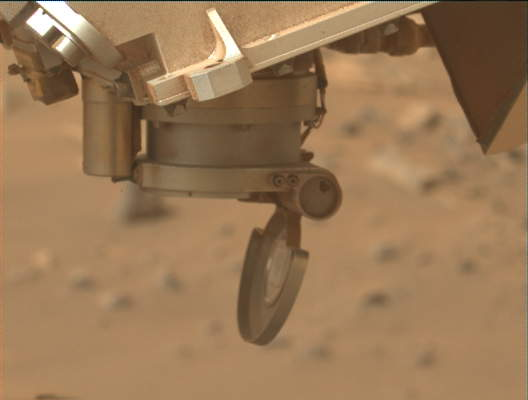
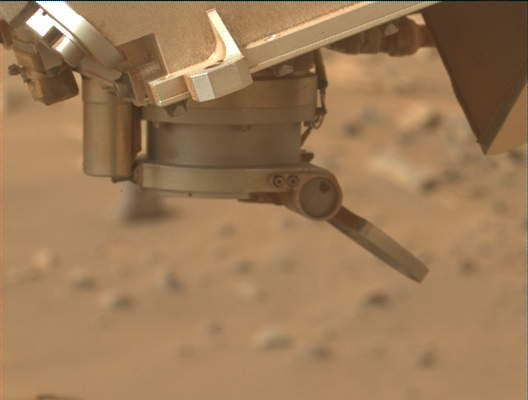
è su una duna!
E il vento sposta le dune e… prima o poi, chissà quando, ne sarà sepolto: maglio della talpa.
C’ha anche il sensore di temperatura, ma solo per aver cura di non gelare la batteria, sob, non sarà talpa vicaria.
è su una duna!
E il vento sposta le dune e… prima o poi, chissà quando, ne sarà sepolto: maglio della talpa.
C’ha anche il sensore di temperatura, ma solo per aver cura di non gelare la batteria, sob, non sarà talpa vicaria.
Nuovo articolo di Marco Carrara pubblicato su AstronautiNEWS.it.
Eclissi ripresa da Perseverance, ultima unità ancora attiva della missione Mars 2020.
Ultima unità operativa? Ma il rover è la parte principale della missione, con sette strumenti scientifico per cercare eventuali prove di pregressa vita marziana nel cratere Jezero, e l’elicottero un dimostratore tecnologico?
Scritta così, perdonami sembra l’opposto
Era solo un po’ di sarcasmo…
Colpito e affondato 
In realtà Ingenuity non può volare ma per il resto è funzionante.
https://twitter.com/stim3on/status/1757878351195234592?t=H96RPPyf-KoDjAjI3H-KLQ&s=19
Ha accesso i motori, senza decollare e inviato un video. Sembra che una pala manchi del tutto.
Sherloc non funziona più.
Ci stanno lavorando, forse si sistema.
Oggi sono passati esattamente 3 anni dall’atterraggio di Perseverance!
Ancora uno sguardo a Ingrnuity…
Un collage di foto in cui è visibile anche la pala perduta.
carino lui, s’è posato sulle sue zampette in quella che sarà la sua posizione definitiva.
Pare che siano riusciti ad aprire SHERLOC ma non trovo conferme ufficiali dalla NASA.
images acquired today, Feb. 29, 2024 (Sol 1076)
Qui un timelapse dell’apertura realizzato da un appassionato con le immagini del rover:
Nel dubbio, Pereverance persevera a raccogliere campioni, che si faccia o meno MSR.
Campione prelevato da un’antica spiaggetta marziana.
Le eclissi di quest’anno di Perseverance, una di Fobos e una di Deimos.
https://twitter.com/NASAMars/status/1776008207497855342?t=OI7rFgWTs-UbneEuM8wOfg&s=19
C’è stata una festa d’addio per Ingenuity che però, sorpresa, continuerà a lavorare.
Now the helicopter is ready for its final act: to serve as a stationary testbed, collecting data that could benefit future explorers of the Red Planet. […] With the software patch in place, Ingenuity will now wake up daily, activate its flight computers, and test the performance of its solar panel, batteries, and electronic equipment. In addition, the helicopter will take a picture of the surface with its color camera and collect temperature data from sensors placed throughout the rotorcraft.
I dati saranno soltanto raccolti a bordo di Ingenuity, non ritrasmessi a terra.
(toccherà organizzare una missione per andare a recuperarli!)
“Whenever humanity revisits Valinor Hills — either with a rover, a new aircraft, or future astronauts — Ingenuity will be waiting with her last gift of data, a final testament to the reason we dare mighty things,” said Ingenuity’s project manager, Teddy Tzanetos of JPL.
https://www.jpl.nasa.gov/news/nasas-ingenuity-mars-helicopter-team-says-goodbye-for-now

Perseverance ha scoperto una roccia, soprannominata “Cheyava Falls”, che potrebbe aver ospitato vita microbica miliardi di anni fa.
“Cheyava Falls is the most puzzling, complex, and potentially important rock yet investigated by Perseverance,” said Ken Farley, Perseverance project scientist of Caltech in Pasadena. “On the one hand, we have our first compelling detection of organic material, distinctive colorful spots indicative of chemical reactions that microbial life could use as an energy source, and clear evidence that water — necessary for life — once passed through the rock. On the other hand, we have been unable to determine exactly how the rock formed and to what extent nearby rocks may have heated Cheyava Falls and contributed to these features.”
Un breve video che descrive la scoperta.

Edit 26/07.
Il selfie nei pressi di “Cheyava Falls"
Mastcam-Z Views ‘Leopard Spots’
The spots seen in the rock are small, irregularly shaped light patches surrounded by a thin rim of dark minerals. These spots indicate chemical conditions during formation or alteration of this rock billions of years ago that could have provided energy for microbial life, if it was ever present at this location on Mars.
Edit 28.07
Thread lungo e interessante di Mike Malaska, chimico organico e astrobiologo al JPL sulla rilevanza di questa scoperta.
[…] That sample is really interesting. In the big scheme of looking for life on other worlds, this is a good start point.
It looks like there is a redox zonation around some grains. That means that at some point there was enough chemical energy for materials to “swap electrons and do chemical things.”
Life is famous for sometimes, not always, being the middleman in those chemical reactions. Harvest that energy and use it for for “life things.”
Do you always have to have a visible redox couple? No. sometimes it can be so small or trace that you miss it. Could be even below instrument detection limits. (Trace gas metabolism can be operating at ppm levels)
But having a visible redox rind is definitely a “nice to have” indicator. If I was wandering around looking for rocks that might indicate life, this would be something I would want to look at closer. […]
Inizia qui:
Edit 29.07
Approfondimento su The Conversation, Sean McMahon , Astrobiology, University of Edinburgh
Perseverance inizia la salita del bordo del cratere Jezero.